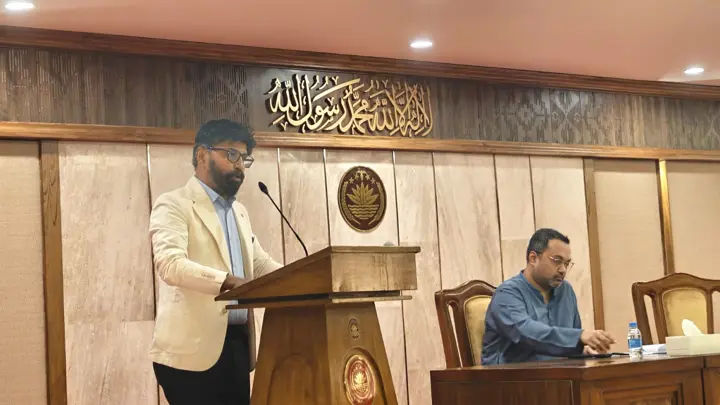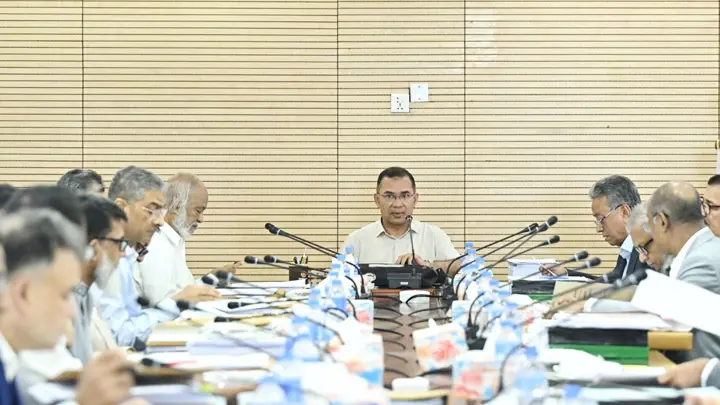




This decision was taken at a meeting of the National Task Force Committee on Hilsa Resource Development. The meeting was held in the conference room of the ministry, chaired by Minister of Fisheries and Livestock and Agriculture Mohammad Amin Ur Rashid.

According to the decision of the meeting, during the ban period, transportation, stocking, marketing, buying and selling, and exchange of hilsa will be banned across the country. During this time, a mother hilsa conservation campaign will be conducted. The government will provide food assistance through VGF to fishermen who refrain from hilsa harvesting.

Minister Mohammad Amin Ur Rashid said that no concession will be given in protecting mother hilsa to ensure sustainable hilsa production. Monitoring and operations must be intensified in the main breeding areas, including Barishal, Chandpur, and Bhola.
He said that district administrations, naval police, Coast Guard, and the fisheries department must work in coordination to strictly implement the ban. He directed increased monitoring at ice factories, wholesale markets, and markets to stop the marketing of illegally caught hilsa.

State Minister for Fisheries and Livestock Sultan Salauddin Tuku said that the reasons for the decline in hilsa production must be identified through research. Along with taking effective measures to stop the production and sale of banned nets, it must be ensured that government assistance reaches genuine fishermen.

He said that due to the decline in hilsa production, fish has to be imported from abroad—this is a matter of concern. An integrated action plan will be taken to protect hilsa as a national resource and GI product and to increase production.
Representatives of various government agencies, including the Ministry of Fisheries and Livestock, Department of Fisheries, Bangladesh Fisheries Development Corporation, and Bangladesh Fisheries Research Institute, as well as deputy commissioners, were present at the meeting.