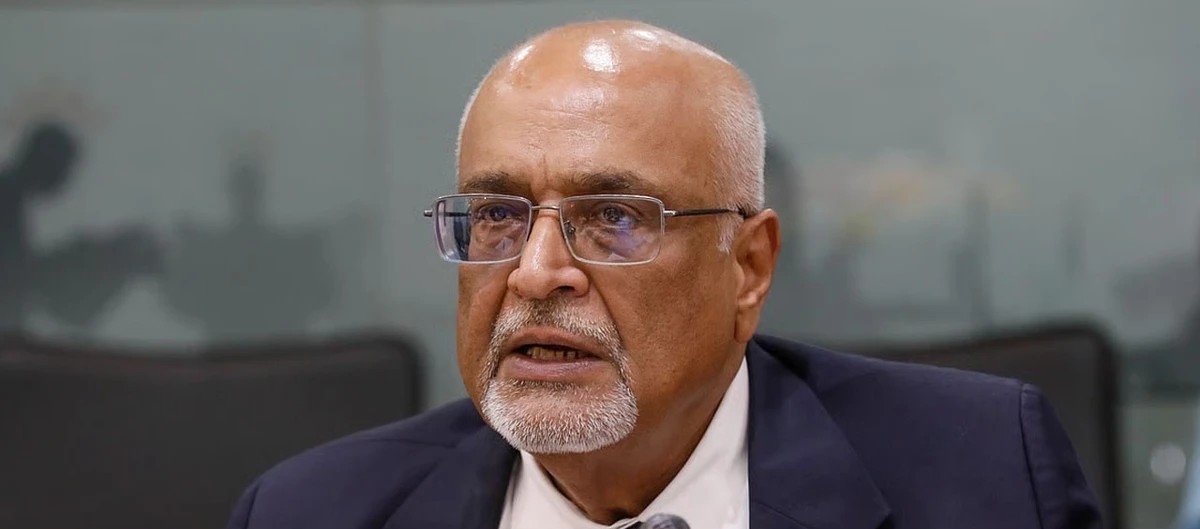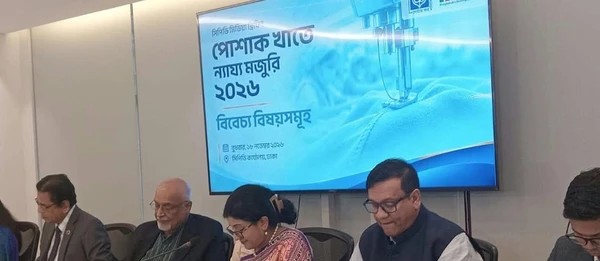

In her keynote, she said the wage was calculated from three separate perspectives: adjustment for inflation, staying above the poverty line, and the cost of a minimum humane and dignified life. Dr Nazneen Ahmed said that with the Tk 12,500 minimum wage effective from December 2023, what could be bought then would require Tk 16,351 in October 2026 to retain the same purchasing power. The calculation used the urban consumer price index of 118.76 in November 2023 and 155.35 in October 2026, giving a price rise of 30.8 percent. In the second calculation, the wage needed to keep a family above the poverty line was determined using the upper poverty line for urban areas in the BBS 2022 Household Income and Expenditure Survey and subsequent inflation. According to CPD, the current upper poverty line for a four-member family is Tk 29,353. Assuming an average of 1.58 earners per family, each earner needs a monthly wage of Tk 18,578.

In the third calculation, the cost of a minimum humane and dignified life for a family was considered, including food, clothing, education, transport, personal care, communication, housing, and emergency needs and savings. According to CPD, a four-member family's monthly food expenditure is Tk 14,154, other essential expenditure Tk 12,267, and house rent Tk 10,000. Adding Tk 1,821 for emergency needs and savings, the family's total monthly expenditure is Tk 38,243. On the basis of 1.58 earners, each earner needs a monthly wage of Tk 24,204. Nazneen Ahmed said CPD did not conduct any new survey for these calculations. Based on existing research, surveys and data, family size was taken as four and the number of earners as 1.58. Different studies differ on family size and number of earners. If the Wage Board considers a different family size or number of earners, the calculated amounts will also change. She said that among the three calculations, the inflation-adjusted Tk 16,351 is a baseline. But CPD's main discussion should be between Tk 18,578 and Tk 24,204. In the long term, to ensure workers' standard of living, nutrition and dignity, the move should be towards a living wage.

Explaining why workers took to agitation, Nazneen Ahmed said that although a Wage Board had been formed, there was a crisis of confidence among workers over whether its decisions would be implemented in time. A kind of 'trust deficit' had developed. This created uncertainty among workers over the process and implementation of wage decisions. She said the method for fixing wages in different grades also needs to be made clearer. Merely forming a Wage Board and bringing owners and workers to the table for a compromise decision cannot be the government's only responsibility. The government also has an active responsibility in wage fixing. Highlighting the need for long-term structural reform in wage fixing, CPD's Executive Director said the interim government's Labour Reform Commission report also recommended a national minimum wage based on a living wage for all sectors. It also called for adjusting wages with inflation every year, forming a permanent National Minimum Wage Commission with workers, owners and experts, and ensuring transparency in wage fixing. The report also recommended a fund to deal with disasters and emergencies and six months' paid maternity leave for women workers.
Referring to the BNP's election manifesto, Nazneen Ahmed said it promises health and education for workers' children, breastfeeding rooms at workplaces, establishing the 'Made in Bangladesh' brand, and fixing wages step by step in a structured way. It also mentions reviewing wages in all sectors every two years, monitoring whether workers are actually being paid their wages, and ensuring equal pay for equal work for men and women.

CPD's Executive Director also said preparations should begin at least six months before wage discussions start. Within that time, necessary surveys, reviews and research must be completed. The matters the Labour Act 2006 says should be considered in wage fixing must also be taken seriously. Alternatively, a permanent wage commission could be formed, under which wages would be fixed following a fixed formula or method. This would reduce the tendency for fresh uncertainty and disputes over wages every year. She said wage fixing is not only a matter for workers and owners; the government also has a responsibility here. Ensuring a humane, nutritious and dignified life for workers and establishing a living wage in the long term should be the goal of policymaking.