


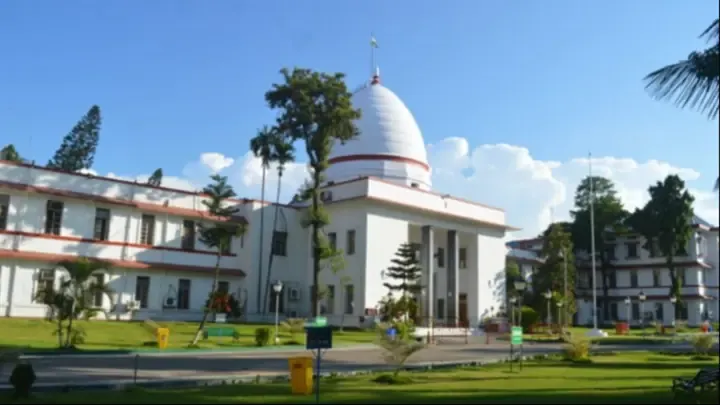

Last Tuesday, Justice Arun Dev Choudhury made this observation after hearing a petition filed by a Muslim person. However, he has been directed to go to the relevant registrar to register the divorce under the 2024 Assam Muslim Marriage and Divorce Compulsory Registration Act, not under the old law.

In the petition, the man stated that he married in 2016. After his wife separated in 2018, when multiple attempts at reconciliation failed, he pronounced talaq three separate times in March, April and May 2026.

Talaq-e-Hasan is a method prevalent in Muslim personal law, in which talaq is pronounced three times at specified intervals. There is an opportunity for reconciliation between each pronouncement. It is different from instant triple talaq, which was declared unconstitutional by India's Supreme Court in 2017.
The petitioner claimed that there is no legal prohibition on Talaq-e-Hasan in India and that he followed the prescribed process. On the other hand, the Assam government said that the law previously used to register such divorces has been repealed.

The High Court said that the manner in which the petitioner pronounced Talaq-e-Hasan is a form of valid talaq and is not currently banned in the country. However, since the old law has been repealed, he must go to the relevant registrar for registration under the 2024 law.

The court further clarified that because the man's wife was not present at the hearing, her legal rights were not violated. If she wishes, she can challenge the validity or effectiveness of Talaq-e-Hasan in an appropriate court or legal forum.