


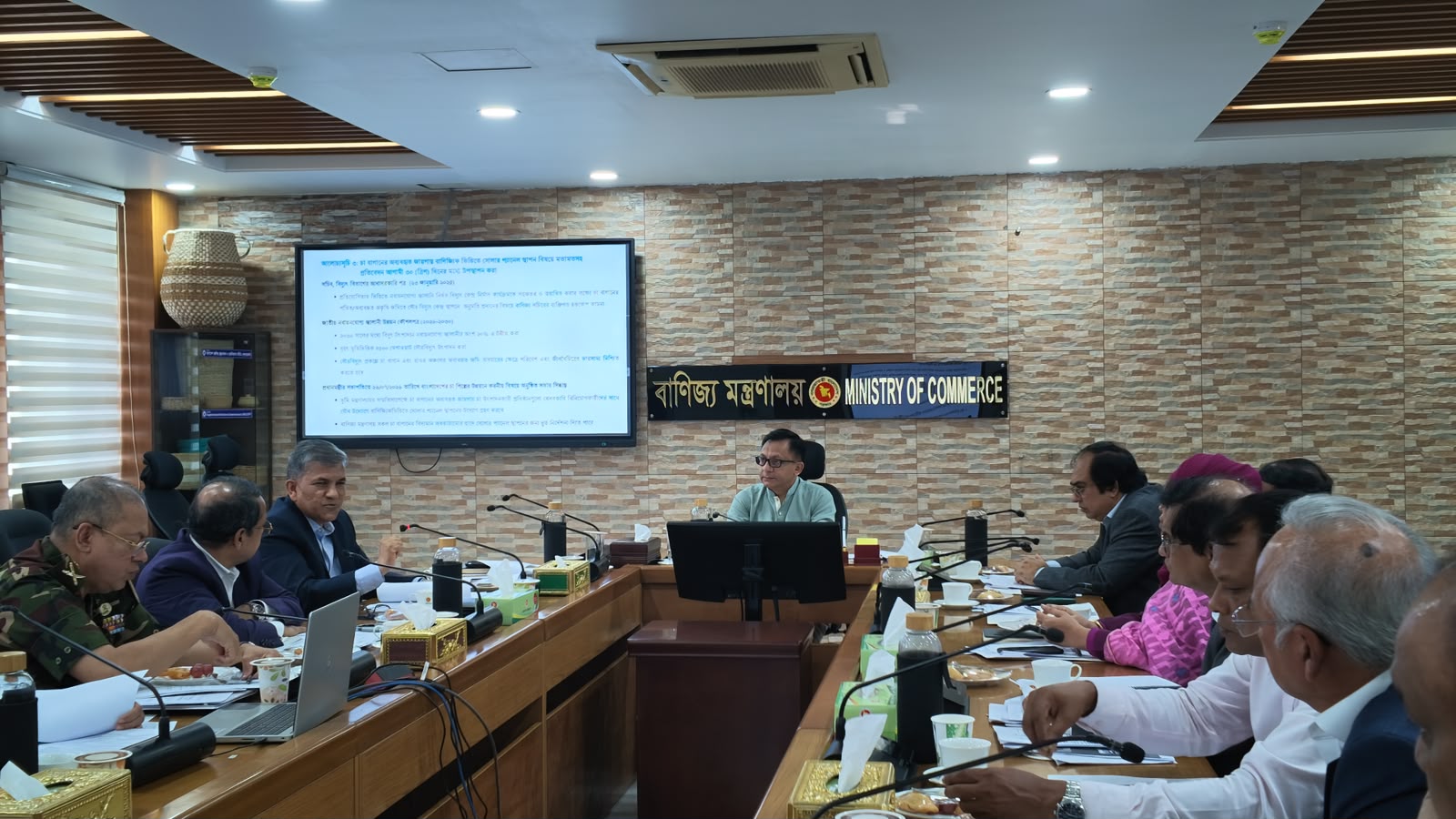

At the first meeting of the advisory committee formed to develop Bangladesh's tea industry at the Secretariat on Sunday, he said the tea industry must be transformed into a capable sector that contributes regularly to the national economy through revenue, taxes and VAT, rather than remaining dependent only on loans and incentives.

At the meeting, a proposal was made to create opportunities for additional income through activities such as solar power projects, agriculture and alternative afforestation on fallow and unused land while preserving the main characteristics of tea gardens. The need for policy approval from the relevant ministries and authorities for this was also highlighted.

The meeting raised the issue of illegal entry of tea through the border and direct sales outside auctions. It was informed at the meeting that legitimate traders are facing unfair competition and the government is losing revenue due to this. To address the situation, proposals were made to increase monitoring as well as rationalize VAT and advance income tax.
Speakers said that alongside government incentives and loans, the management efficiency and own financial capacity of tea gardens must be increased. Discussions were also held on reviewing garden-based action plans and providing necessary banking and policy support.

The commerce minister said the livelihoods of a huge number of workers are linked to the tea industry. Therefore, the sector needs to be made sustainable in the interest of workers' protection, environmental balance and the national economy. He called upon all concerned parties to work in coordination to overcome the crisis in the tea industry.