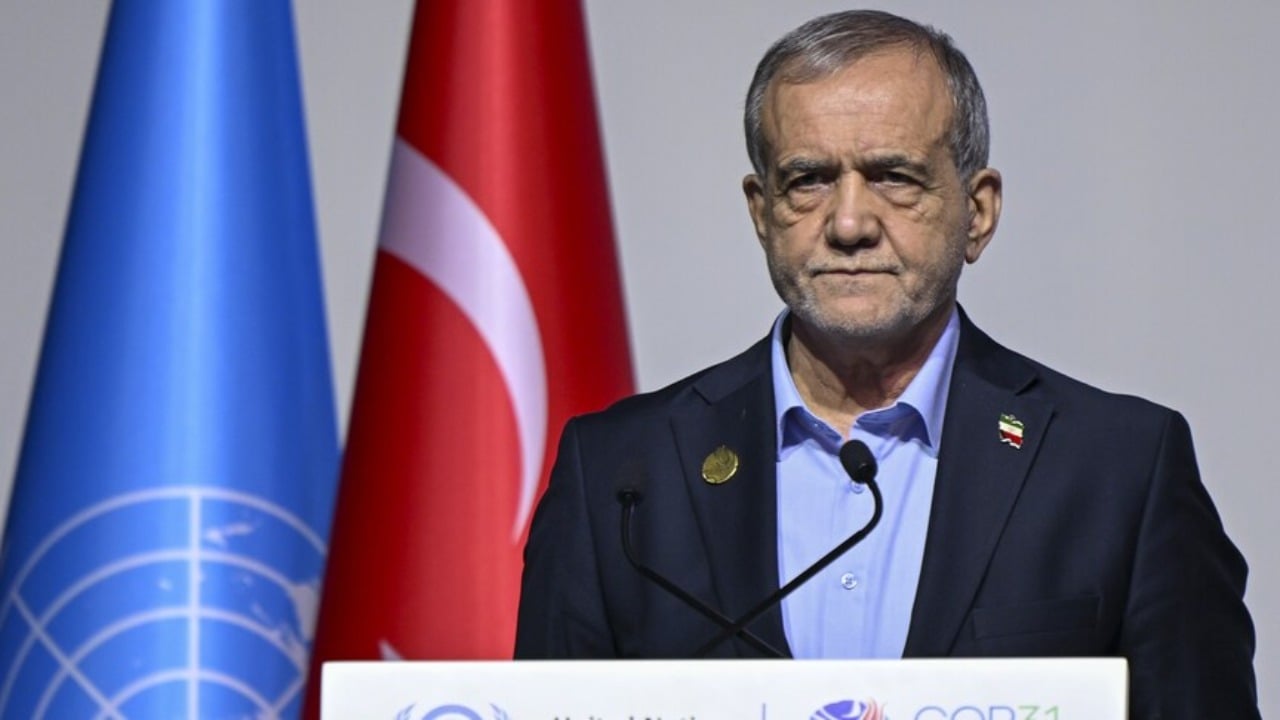

He provided this information in a speech on Wednesday at the United Nations Climate Conference COP31 in Turkey. Pezeshkian said that an attack on the energy facility in Asaluyeh in southern Iran released 500,000 tons of carbon dioxide, while an attack on a fuel storage site near the capital Tehran released another 1 million tons of carbon dioxide.


On March 7, Israel attacked Tehran's oil storage facilities, and on March 18, a gas processing facility in Asaluyeh in southern Iran. Iran's president alleged that the military operations that began on February 28 have caused a severe environmental catastrophe by Washington and Tel Aviv. He said that while various initiatives are being taken internationally to reduce greenhouse gas emissions, the destruction of infrastructure, widespread fires, and the release of pollutants into the atmosphere in military strikes conflict with those efforts.

At the same time, Pezeshkian condemned Israel's military operation in Gaza. He said that the destruction of infrastructure, water resources, and natural ecosystems has left the Strip facing a humanitarian and environmental catastrophe. He also noted that attacks on Iran's protected forests and environmentalists' offices are damaging natural resources and putting future generations at risk.

Calling for ensuring international accountability for these damages, Pezeshkian said that the environmental damage caused by US and Israeli military operations in Iran and Gaza should be documented by international organizations. In addition, mechanisms for obtaining compensation should also be established.