


Latest

125,000 deaths a year from antibiotic ineffectiveness: State Minister for Health

Advertisement
125,000 deaths a year from antibiotic ineffectiveness: State Minister for Health
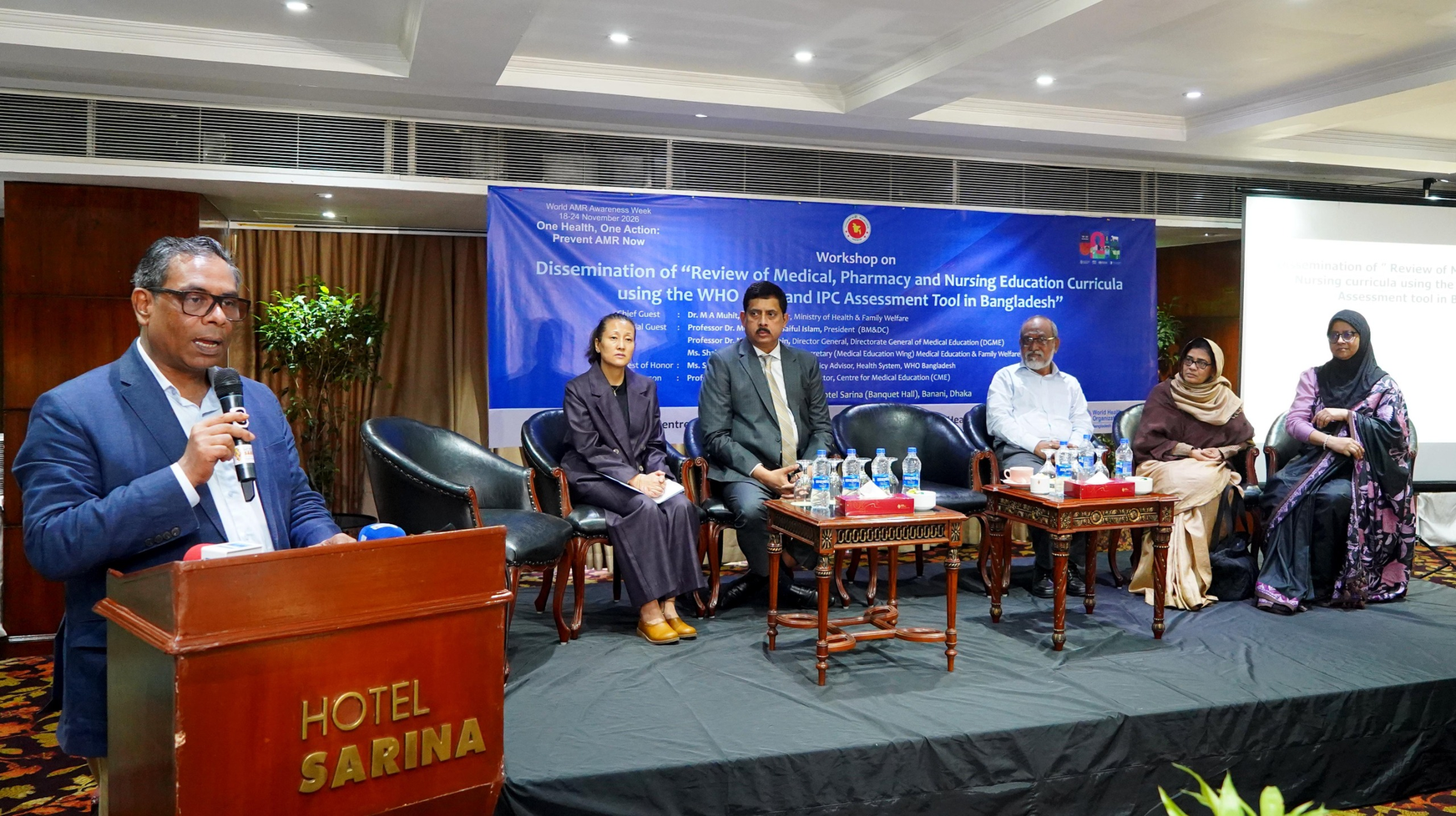
State Minister for Health and Family Welfare Dr. M A Muhit said that due to antibiotic resistance in the country, 125,000 people die every year. Even more patients have to stay in hospital for long periods, and treatment costs rise. The government is taking various steps to control antibiotic resistance. He said this while speaking as chief guest at a workshop organized at Hotel Sarina in Banani, Dhaka, on Monday (November 23). The workshop was organized on reviewing the curricula of medical, pharmacy and nursing education following the World Health Organization (WHO) assessment method. It is being implemented jointly by the Centre for Medical Education (CME), Directorate General of Medical Education (DGME) and WHO.

International public health expert and State Minister for Health Dr. M A Muhit said that unless behavioral change is brought among physicians and patients, it is not possible to tackle this crisis with knowledge or awareness alone. To stop the sale of antibiotics without prescription or over the counter, specific policy must be formulated and strictly implemented.

Advertisement
300*250 Ad-A-P1

State Minister for Health Dr. M A Muhit said the government is introducing a digital health system or e-health to prevent indiscriminate use of antibiotics. Under it, electronic medical records and electronic prescription systems will be in place. As a result, everything will come under digital surveillance.

Advertisement
300*250 Ad One-Green

Dr. M A Muhit further said that government hospital pharmacies across the country will be brought under an integrated network. This will prevent wastage of free medicines and ensure that quality medicines reach the right patients. He welcomed the initiative to add modern information and international standards to the curricula of medical, nursing, midwifery and pharmacy education.

Director General of DGME Dr. Nazmul Hossain said, 'Although there are specific protocols in the country on which antibiotic should be used for which disease, many of our leading physicians and professors of medicine are not aware of it. To strengthen the fight against antimicrobial resistance, these gaps must be identified and addressed in medical education curricula.'

Advertisement
728*90 Ad One-Y

Professor Dr. Shamima Rahman, Director of the Centre for Medical Education (CME), presided over the event and presented the keynote paper. WHO Bangladesh Senior Health Policy Adviser Sangay Wangmo and Additional Secretary of the Health Education and Family Welfare Division Shabnam Mustari also spoke.


Advertisement
728*90 Ad One-P
Advertisement
728*90 Ad One-be
Dhaka Magazine Follow our Google News channel for updates
Health More from
Two more die of dengue, 1,519 newly infected

Two more die of dengue, 1,519 newly infected

1 day ago
Does eating garlic every day reduce stroke risk?

Does eating garlic every day reduce stroke risk?

1 day ago
Eight die of dengue, 1,952 new patients hospitalized

Eight die of dengue, 1,952 new patients hospitalized

1 week ago
Eight more die with measles symptoms

Eight more die with measles symptoms

1 week ago
Lead Found in Food From Aluminum Pots and Pans, Health Risks Growing

Lead Found in Food From Aluminum Pots and Pans, Health Risks Growing

1 week ago
Doctors have been victims of politics in the past; let it not happen at our hands

Doctors have been victims of politics in the past; let it not happen at our hands

1 week ago