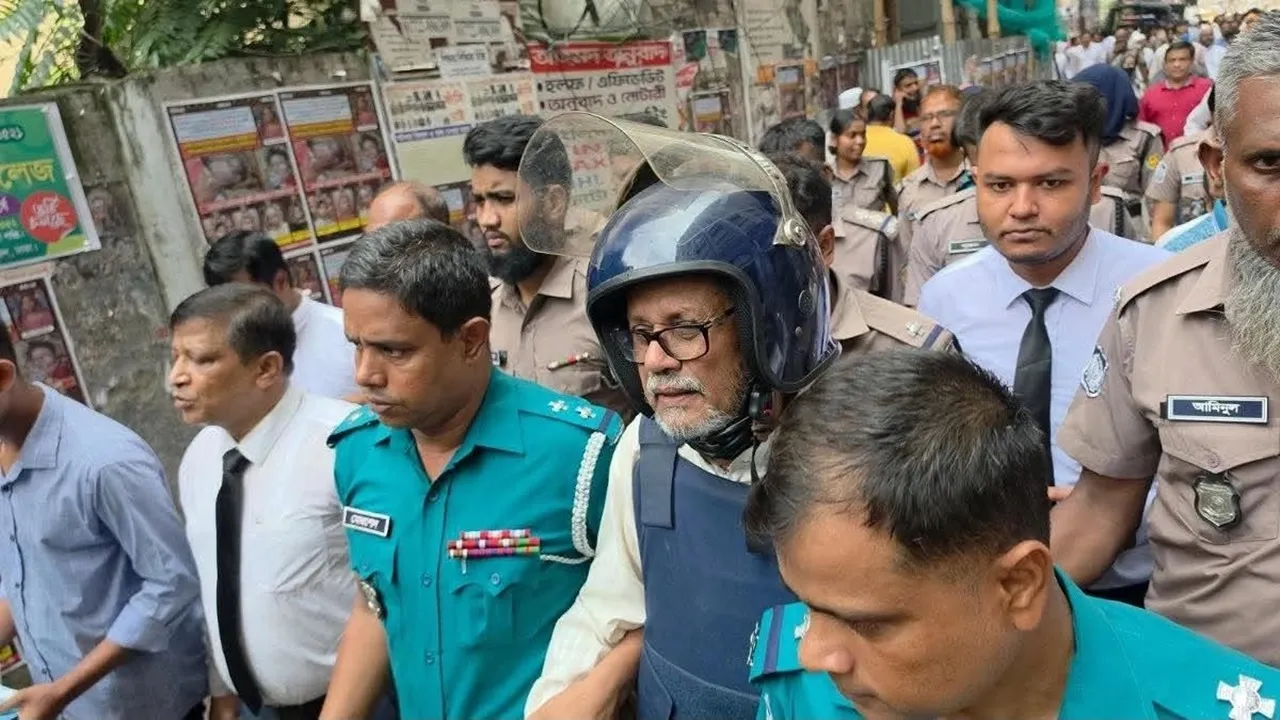


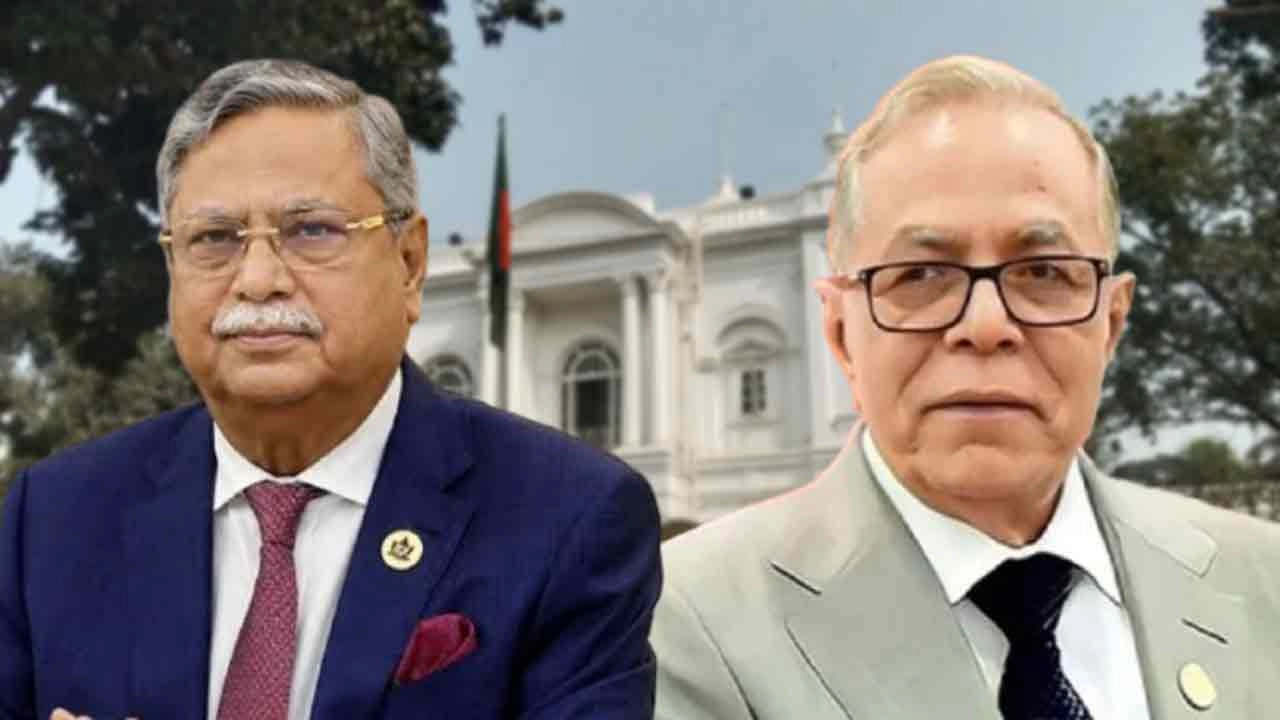

On Sunday (July 26), this complaint was submitted to the tribunal on behalf of Bangladesh Azad Party.

Confirming the matter, retired Colonel Hasinur Rahman said that an application has been made to investigate the role of Md. Sahabuddin and Abdul Hamid in the context of their duties as heads of state during the July mass uprising.

The complaint states that despite occupying the highest constitutional position of the state during the July mass uprising, Md. Sahabuddin did not play any effective role. Additionally, the complainants have described his failure to take a public stance on various allegations including 'Aynaghar' (torture cells), enforced disappearances, and murders before August 5 as his 'silent support'.
In a briefing at the tribunal premises, leaders of the Bangladesh Azad Party claimed that Abdul Hamid and Md. Sahabuddin were in charge as heads of state during various controversial incidents including the Pilkhana massacre, the Shapla Chattar incident, enforced disappearances and murders. According to them, in light of the principle of 'Superior Responsibility' established in international law, the role of the highest responsible persons of the state should be brought under investigation.

They allege that even though they served as the supreme commanders of the three armed forces, the then presidents assisted the fascist government, did not take a stand against injustice, and were beneficiaries of power. Based on these allegations, an application for investigation has been made to the tribunal.

Meanwhile, on the same day, the State Dialogue Forum filed a separate complaint with the International Crimes Tribunal against recently former president Md. Sahabuddin, accusing him of assisting former prime minister Sheikh Hasina, who is a fugitive, during the July mass uprising.
It is to be noted that although complaints have been filed, the International Crimes Tribunal has not yet made any decision on this matter. The veracity of the complaints will be verified through the judicial process.