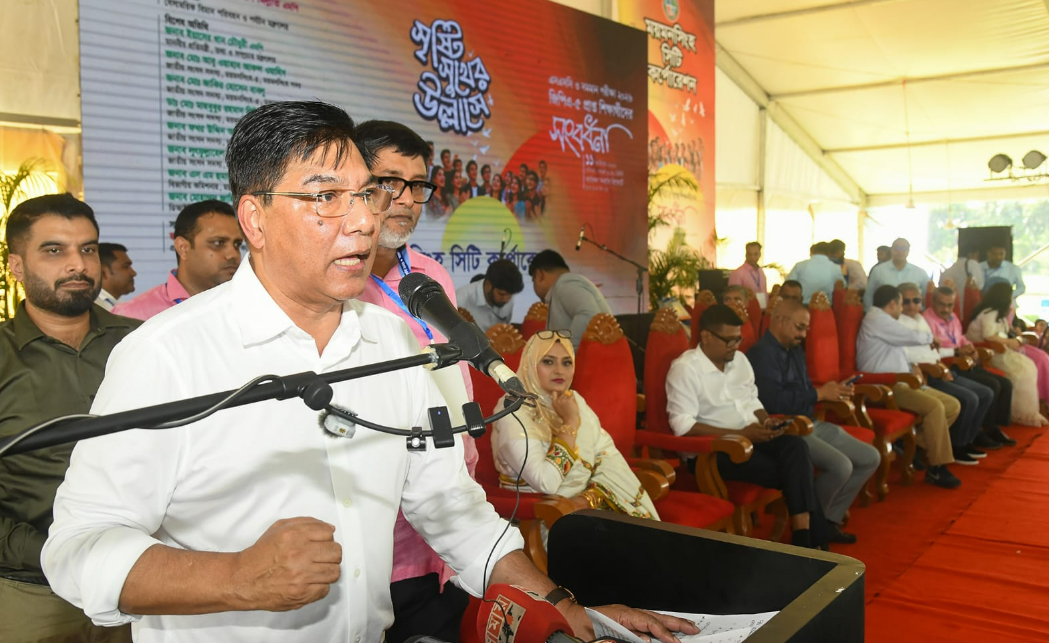




He said these things as the chief guest at the 'Conference on Sericulture Research and Development in the Context of Strategic Cooperation between China and Bangladesh' held on Tuesday in Rajshahi, jointly organized by Bangladesh Sericulture Board and China's Zhejiang Sci-Tech University. The conference was organized by the China-Bangladesh Silk Research Center with the cooperation of the Bangladesh Sericulture Development Board.

The State Minister said sericulture is an important sector associated with Bangladesh's long-standing tradition. Rajshahi in particular has historically been known as the 'Silk City'. The sericulture sector can play an important role in creating rural employment, increasing farmers' income, empowering women and achieving economic development.

He said the government's goal is to make the entire value chain of silk—including mulberry cultivation, silkworm rearing, cocoon production, silk yarn production, weaving, product development, branding and marketing—modern, productive, competitive and environment-friendly.
Md. Shariful Alam said research and technological cooperation are extremely important to achieve this goal. China's experience in sericulture research, technological innovation and industrial development is important for Bangladesh. Cooperation will be increased among Chinese research institutions, universities, the Bangladesh Sericulture Development Board and related research organizations.

He said there are opportunities for cooperation in high-yielding and climate-resilient mulberry varieties, improved silkworm varieties, disease and pest management, modern silk yarn production, quality testing and production of value-added silk products.

The State Minister said effective connections need to be established among researchers, farmers, entrepreneurs and industrial establishments in the sericulture sector so that research findings can be applied at the field level and commercial opportunities are created. At the same time, initiatives will be taken to further strengthen the silk industry through modern technology, skill development and investment.
He said Rajshahi Silk has already received Geographical Indication (GI) product recognition. Initiatives will be taken to further strengthen its quality, product diversity, branding and position in the international market.
Vice Dean and Professor of Zhejiang Sci-Tech University Shu Qiuji said education, research and skilled human resource development are important for the development of the silk industry. The International Institute of Silk at Zhejiang Sci-Tech University has been conducting regular education and research activities on silk-related subjects. Technological innovation, quality improvement and international cooperation play an important role in the sustainable development of the sericulture sector.
He said research is ongoing in China on silk production, technology development, smart reeling, quality determination of silk products and new uses. Through research, technology exchange and experience sharing between Bangladesh and China, cooperation can be further expanded for the development of the sericulture sector.
The event was attended by Member of Parliament from Rajshahi-3 constituency Abu Sayeed Chand, Secretary of the Ministry of Textiles and Jute Sharf Uddin Ahmed Chowdhury, Director General of the Bangladesh Sericulture Development Board Md. Taufiq Al Mahmud, Chief Coordinator of the China-Bangladesh Silk Research Center Professor Nusrat Jahan Nipa, academicians, researchers, related businessmen and senior officials of the ministry.