


He said the Rohingya crisis is not merely a bilateral issue between Bangladesh and Myanmar; it is also closely linked to human rights and humanitarian values. Building national consensus and strong public support is essential to ensure the safe, dignified and sustainable repatriation of the Rohingya, he added.

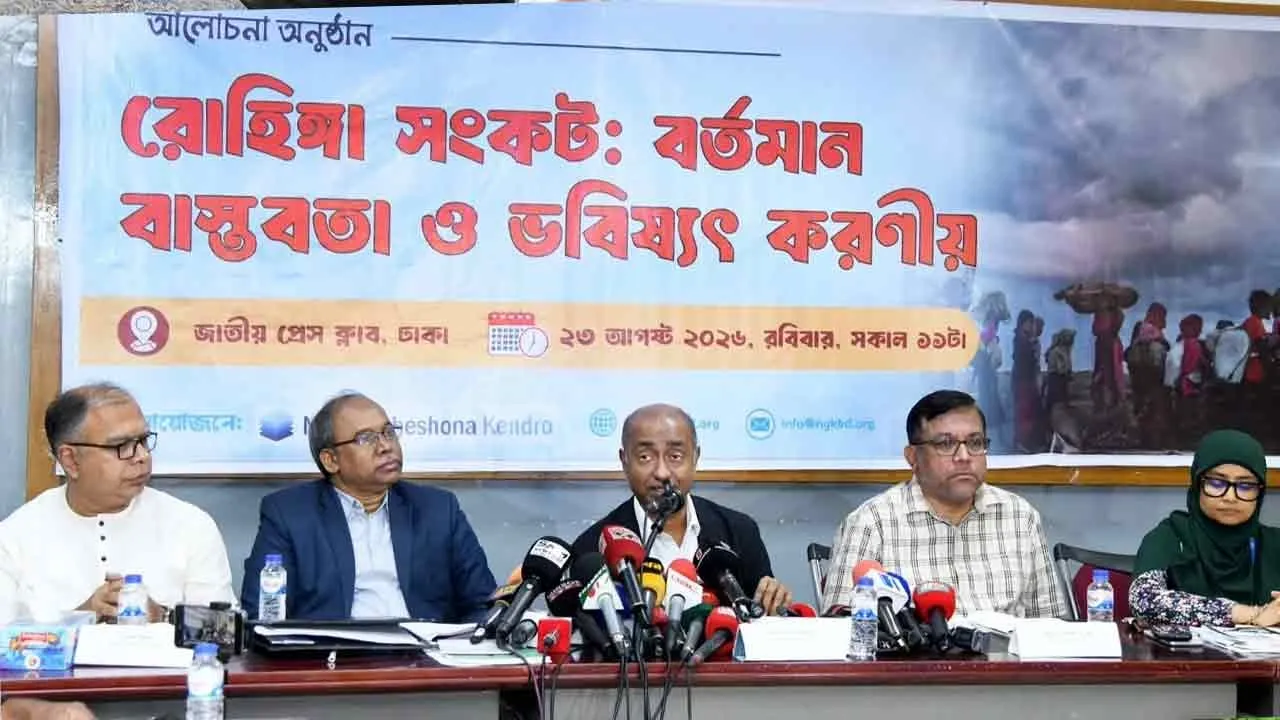
The minister made the remarks as the chief guest at a discussion titled “Rohingya Crisis: Current Reality and Future Course of Action,” organised by the Policy Research Centre at the National Press Club at 11am on Sunday (August 23).

Asaduzzaman said Bangladesh needs to engage in discussions on the Rohingya crisis with the United States, China and India. However, he noted that to take an effective position on any issue at the international level, the people of Bangladesh must first stand united.
He stressed that the country’s territory, independence and sovereignty must be given the highest priority, rising above political differences and ideological divisions. Bringing the Rohingya issue under a national consensus, he said, would be an important step towards resolving the crisis.

Speaking about Bangladesh’s decision to shelter the Rohingya, the law minister said they fled to Bangladesh after facing genocide and persecution amid Myanmar’s internal crisis. Bangladesh provided them shelter on humanitarian grounds, he said.

He said every person has fundamental rights, including the right to life, food and security. Since the Rohingya were deprived of these rights in their own country and were forced to seek refuge in Bangladesh, supporting them has become a humanitarian responsibility.
Highlighting government initiatives, the minister said a national committee was formed soon after the prime minister took office to address the Rohingya crisis. Alongside security concerns, diplomatic, social and human rights issues are also being given priority. The government is also working to address criminal activities and other security risks within the Rohingya community, he added.
Stating that Bangladesh does not want to interfere in Myanmar’s internal affairs, Asaduzzaman said demanding the return of the Rohingya to their homeland does not constitute interference. Their identity, rights and safe repatriation must be addressed in accordance with international and human rights law, he said.
“Rohingya are not Bangladeshis, nor are they an indigenous community of this territory. But they are human beings and they have human rights,” the law minister said. Referring to the Rohingya as a historic population of the Rakhine region, he stressed the need to ensure their rights and safe repatriation.
He urged the media, civil society and various social pressure groups to play an active role in building national public opinion. Strong public support in Bangladesh, he said, is essential for the government’s international efforts to achieve a lasting solution to the Rohingya crisis.
The event was chaired by Professor SK Toufiq M Haque, a trustee member of the Policy Research Centre. Its Executive Director Dr. Shafik Ahmed delivered the welcome address, while former Bangladesh ambassador to Myanmar Mohammad Sufiur Rahman presented the keynote paper.
Associate Professor Dr. Ishrat Zakia Sultana of North South University, The Daily Star journalist and diplomatic correspondent Parvez Palma, Rohingya women’s rights activist Roshia Sultana, and distinguished representatives from various professions, journalists, academics, human rights activists and Rohingya representatives participated in the discussion.