

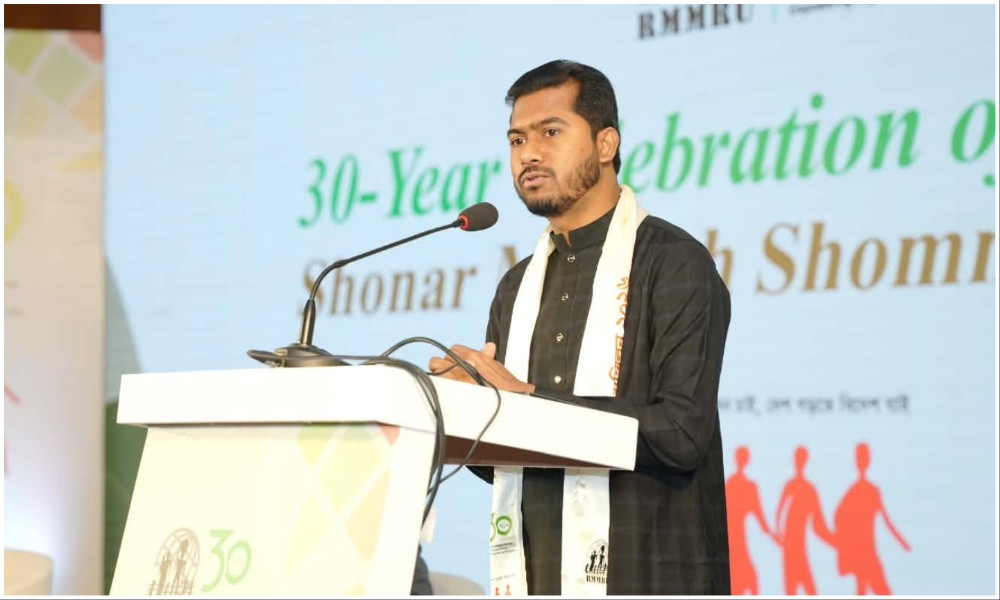

He said this while speaking as a special guest at the first session of the ‘Sonar Manush Sammelan 2026’ conference, organized at Hotel InterContinental in the capital on Tuesday to mark the 30th anniversary of the Refugee and Migratory Movements Research Unit (RMMRU).

The state minister said 11 sectors have been prioritized to resolve expatriates' long-standing problems. In discussions with expatriates, issues such as brokers and corruption in passport services, not getting work abroad as promised, and suffering to receive services from embassies came up. There are also complaints about mismanagement at airports.

He said there are plans to make services of public and private institutions at home and abroad easier, including financial transactions, through the Expatriate Card. In addition, consideration is being given to healthcare facilities in hospitals, quick resolution of land-related problems, and providing redress within a specified time.
Mentioning the arrangement of a 3 percent incentive for sending remittances through legal channels, Nurul Haque said initiatives are being taken to make Probashi Kallyan Bank more effective. There are also plans to integrate the bank with general banking operations and connect it with the Expatriate Card. Currently, the bank offers loans from Tk 3 lakh to Tk 10 lakh. Consideration is also being given to increasing loan facilities for expatriates to start businesses, launch new ventures, or build houses after returning home.

Emphasizing the need to stop irregularities and illegal processes in sending workers abroad, the state minister said the government is working to protect expatriates' rights and resolve their problems. Highlighting the contribution of private institutions in the immigration sector over the past five decades, he said everyone must play a responsible role to build the new Bangladesh that young people aspire to.

According to RMMRU, over the past three decades the organization has conducted more than 100 studies, contributed to formulating 13 national policies and strategies, and provided rights-based services to migrants in 21 districts of the country. Researchers, academics, representatives of development organizations, cultural activists, and media personnel were present at the conference.