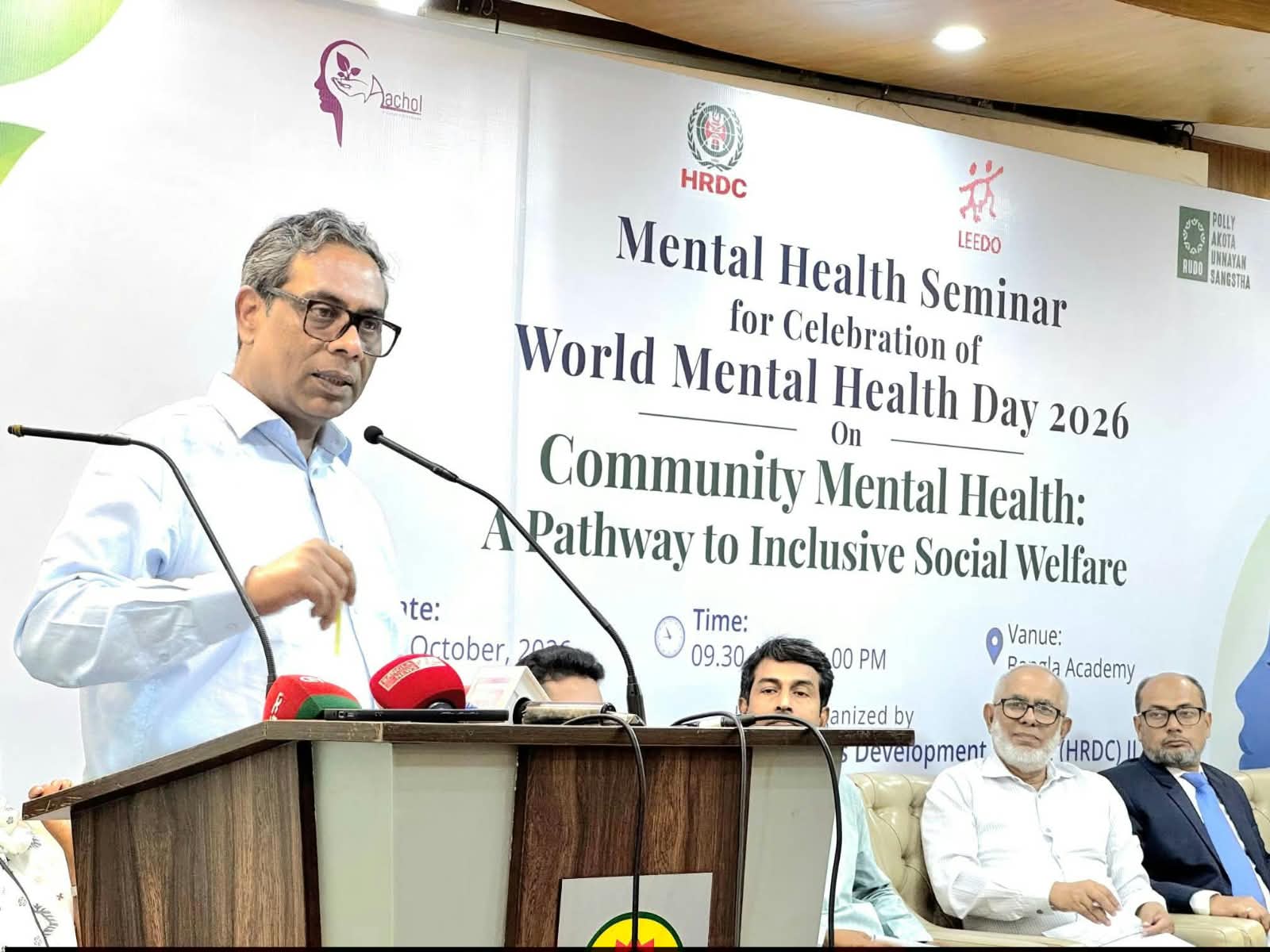


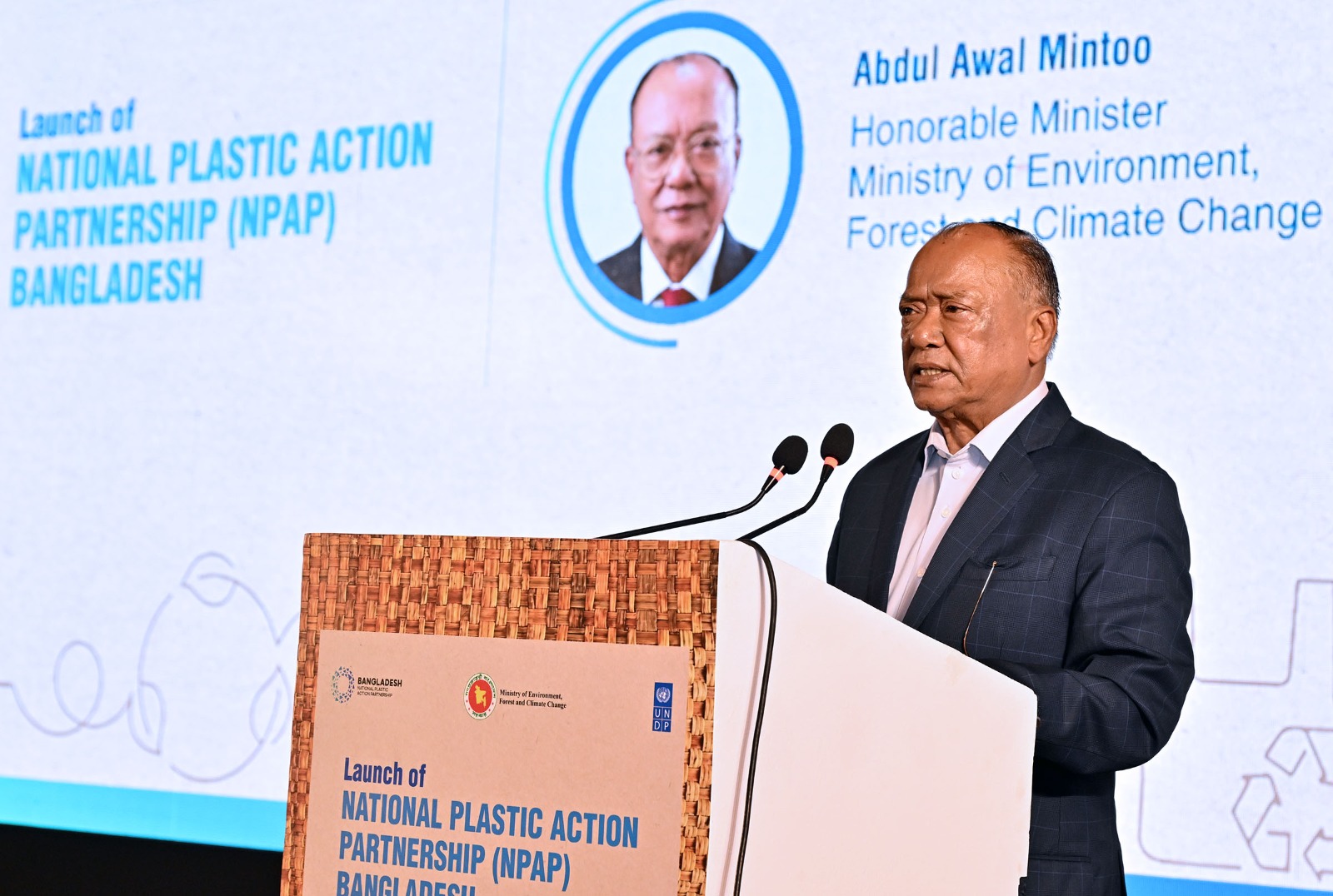

He said this while speaking as chief guest at the inaugural ceremony of National Plastic Action Partnership (NPAP) Bangladesh at the Pan Pacific Sonargaon Hotel in Dhaka on Tuesday. The Ministry of Environment, UNDP Bangladesh and the World Economic Forum's Global Plastic Action Partnership jointly organized the event. Its theme was ‘Integrated efforts towards a circular economy’.

The environment minister said plastic pollution is having negative impacts on drainage systems, rivers, wetlands, coasts, public health and ecosystems. However, plastic is also linked to production, trade and employment. Therefore, solutions must be sought by considering the entire process from production to use and waste management.

Emphasizing effective implementation of the Extended Producer Responsibility (EPR) Guidelines-2026 in plastic waste management, he said that for this, reliable data, necessary infrastructure, cooperation of producers and regulatory agencies, and transparency and accountability must be ensured.
The minister said NPAP Bangladesh will help create coordination among various initiatives, implement policies, scale up innovative solutions, and connect investments with national priorities. At that time, he called upon businesses to come forward with investment and effective solutions, as well as urged research institutions, development partners and financial institutions to join the initiative.

In his speech as special guest, State Minister for Environment Sheikh Faridul Islam said the success of NPAP should be measured not by the number of meetings but by real results. Effective implementation of policies, reliable data, increased investment and improvement in the living standards of waste workers will be important criteria for success.

UNDP Bangladesh Resident Representative Stefan Rodrigues said plastic pollution blocks drains and increases waterlogging and flood risks. Burning waste, including plastic, in open spaces spreads harmful substances into the air and creates public health risks. He emphasized separating waste at the household level and keeping it segregated during collection.
At the event, Clemens Schmid, director of the World Economic Forum's Global Plastic Action Partnership, delivered a video message. The event, chaired by Acting Secretary of the Ministry of Environment Dr. Fahmida Khanam, was attended by representatives of government agencies, diplomatic missions, development partners, the private sector, educational institutions, and the waste management and recycling sector.