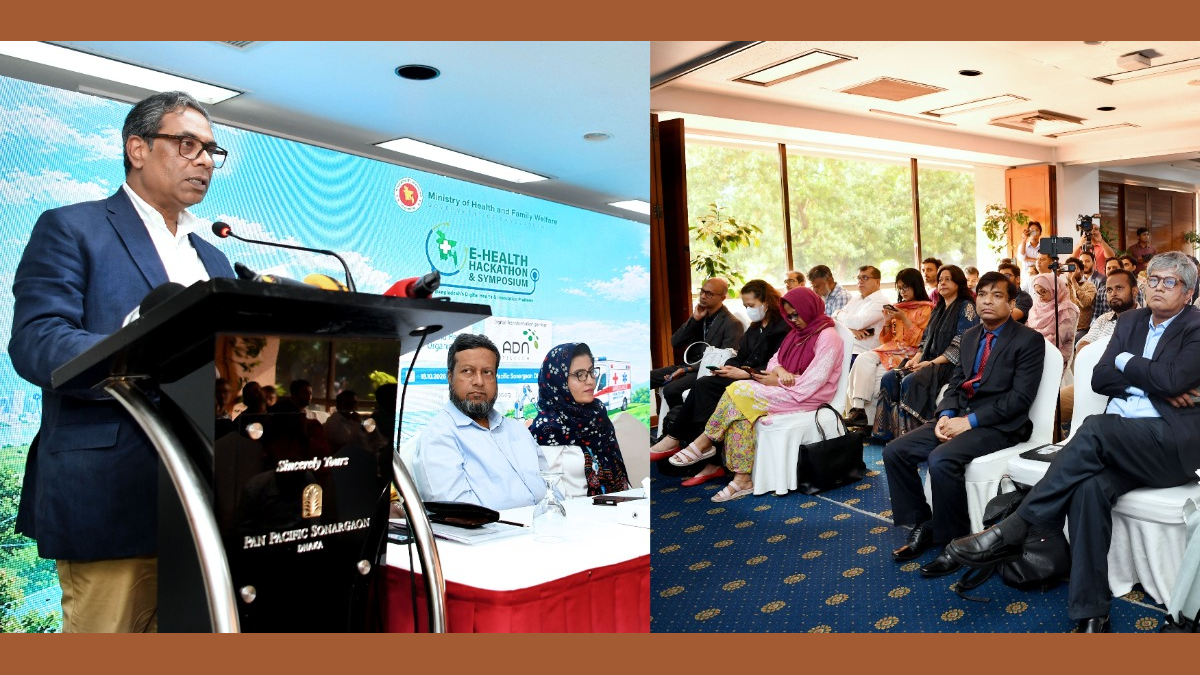


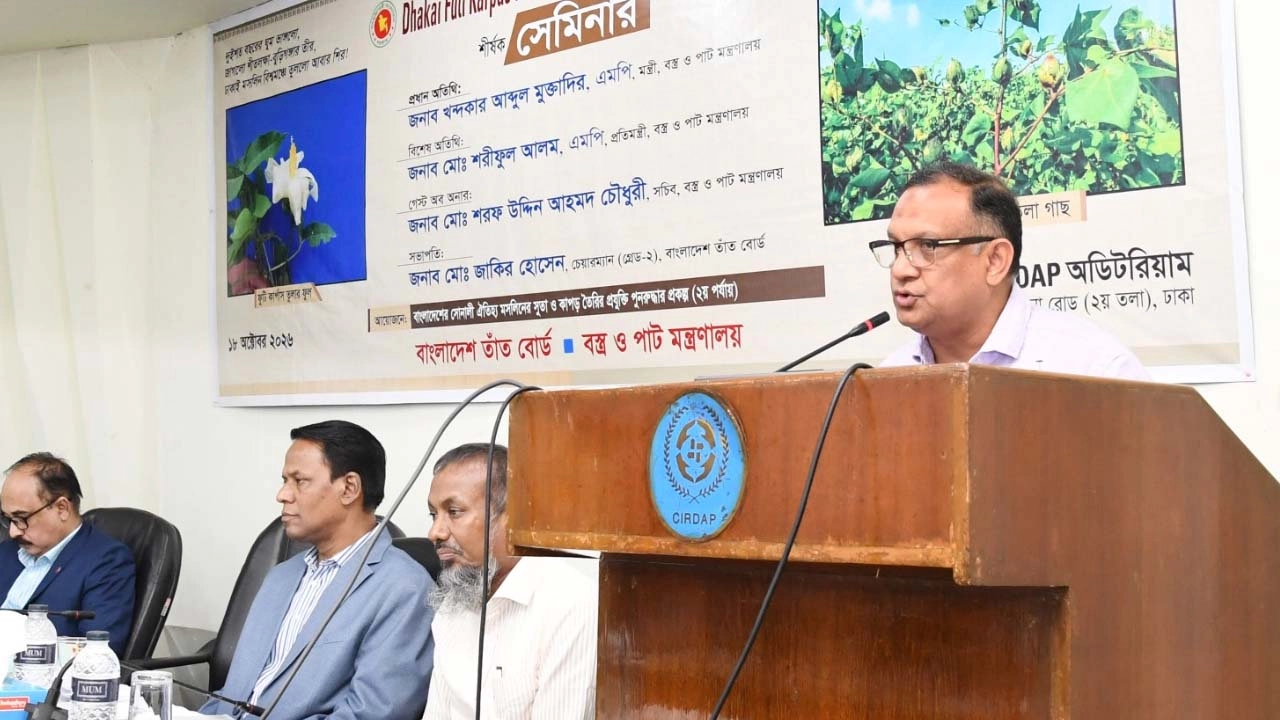

He said this in his speech as special guest at the ‘Seminar on variety development of Phuti Carpas cotton, the raw material for making Dhakai muslin’ held at the CIRDAP auditorium in the capital on Sunday (18 October), organized by Bangladesh Handloom Board. At the same time, he emphasized the rapid and effective transfer of the revived muslin-making technology to private entrepreneurs.

The state minister said significant progress has been made in the variety of Phuti Carpas cotton and fiber quality in the Handloom Board's research. The main responsibility now is to spread this technology at the field level by involving skilled weavers, entrepreneurs and investors. He said that, according to the directives of Prime Minister Tarek Rahman, the ministry will provide all-out cooperation to researchers in creating opportunities for sustainable production of muslin, marketing while maintaining quality, and export.
Recalling the establishment of the Handloom Board by President Ziaur Rahman in 1977 for the expansion of the handloom industry and former Prime Minister Begum Khaleda Zia's Handloom Bank plan, the state minister urged increasing the financial capacity of marginal weavers. He said the government, universities and private entrepreneurs must work together to preserve the heritage of muslin and harness the commercial potential of the economy.
Secretary of the Ministry of Textiles and Jute Sharaf Uddin Ahmed Chowdhury, Chairman of Bangladesh Handloom Board Md. Zakir Hossain, and principal researcher of Egypt's Cotton Research Institute Dr. Ahmed Mohamed Abdelmoghny Abdelbakis, along with local and foreign researchers and experts, were present at the event.