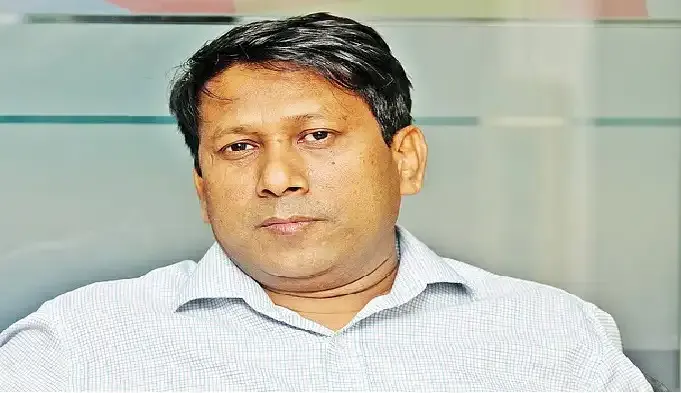




Speaking as the chief guest at a meeting on e-commerce implementation held at the Ministry of Commerce conference room on Tuesday, the Minister noted that various ministries and agencies are currently working on sensitive products across agricultural, food, and industrial sectors. He emphasized the need to build an integrated management framework by analyzing which of these goods are locally produced, which are import-dependent, and which rely on a combination of domestic production and imports. The meeting was presided over by Commerce Secretary Md. Ataur Rahman Khan.

Pointing out that market price hikes are often driven by supply shortages, the Commerce Minister stressed that preparations must be made in advance to prevent sudden supply gaps caused by issues at production or import sources.

"Whether the government will subsidize prices to lower them is a separate issue, but our primary objective is to ensure that instability does not erupt in the market due to a complete halt in supply," he said.
He further noted the necessity of regularly analyzing local production, seasonal deficits, international market conditions, and the export capacities of source countries for various agricultural products such as lentils and onions.

Citing an example, the Minister explained that if domestic lentil production is projected to decline in a given year, preparations must begin even before the harvest is brought home. At the same time, authorities must evaluate the production situations and export capabilities of countries from which goods are imported.

"We need to know when a shortage of a specific product might arise, which country is best to import from at a given time, and which market will offer comparatively favorable pricing," he added.
To achieve this, the Commerce Minister highlighted the necessity of creating an effective AI-driven platform. This system will analyze 10 years of market data, production metrics, import-export trends, and international market conditions to facilitate swift decision-making.
He pointed out that currently, gathering and analyzing such data requires multiple ministry meetings, which consumes a significant amount of time. However, an AI-based system could generate necessary analyses within minutes.
"In the past, obtaining a piece of information required inter-ministerial meetings and hours of discussion to reach a consensus. AI will be able to analyze 10 years of data and outline potential scenarios within minutes," he stated.
According to the Minister, the AI system will be able to forecast when product shortages might occur, which countries offer advantageous import options, what their export capacities are, and when purchasing will yield the best market benefits. He believes this initiative will help stabilize the supply chain for essential commodities throughout the year.
The Commerce Minister clarified that the Ministry of Commerce will not operate this initiative in isolation; rather, it will work in an integrated manner alongside relevant ministries and agencies, including agriculture and food. All participating agencies will have access to utilize the necessary data.
He added that to maximize the effectiveness of AI technology, ensuring reliable data sources is critical. A robust database will be built by integrating government data with various international open-source and subscription-based information channels.
Acknowledging that developing the system will take time initially, the Minister expressed confidence that after passing through a few phases, it will deliver analyses much faster and more effectively than humans.
"The core objective of this initiative is to build the capability to make decisions based on rapid and accurate information, which will further strengthen the country's market management and protect consumer interests," he concluded.
The meeting also featured discussions on the development of the e-commerce sector, technology-driven market management, and future action plans.