

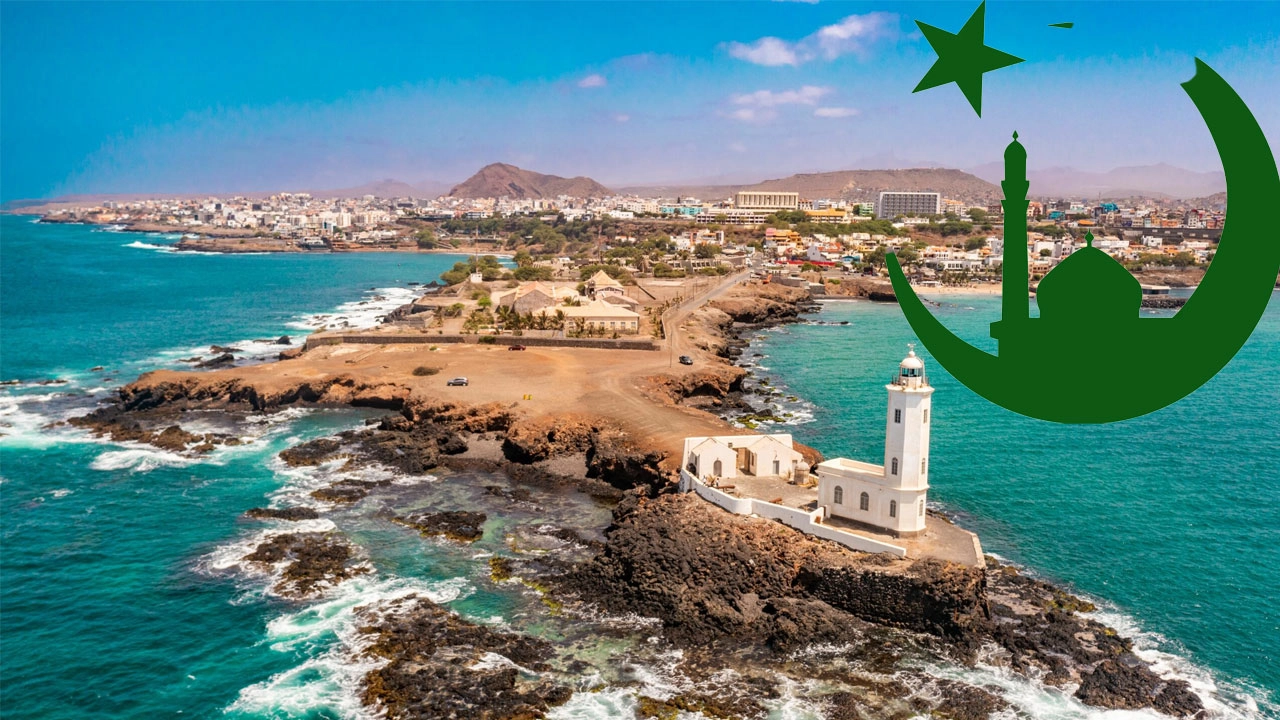

The number of Muslims in the Atlantic island nation of Cape Verde is very small. According to the 2021 national census, out of a population of about 505,000, the number of Muslims is approximately 4,900, which is about 1 percent of the total population.

Most Muslims in the country are Sunni and they mainly came as immigrants from West African countries such as Senegal, Guinea-Bissau and Mali. They are more concentrated in the capital Praia, Mindelo, Sal and Boa Vista islands. They contribute to the country's economy by working in business, construction and service sectors.

How Islam arrived
After the Portuguese colonized Cape Verde in 1462, Islam first arrived through Muslim traders and slaves from West Africa. At that time, Wolof, Mandinka and Fulani Muslims came to the islands, but due to Portuguese rule, religious practice outside Catholicism was strictly suppressed. The construction of mosques, public worship and Islamic educational activities were restricted for a long time.
New opportunities after independence
After independence in 1975, the constitution guaranteed religious freedom, allowing Muslims to practice their religion openly. Later, economic liberalization and increased immigration from ECOWAS countries led to a gradual increase in the Muslim population.

In 1990, the first government-recognized mosque was built in the capital, Praia. After the law on registration of religious organizations came into effect in 2014, the activities of Muslim organizations expanded further.

Religious life and harmony
Muslims in Cape Verde live in peaceful coexistence with the local Catholic population. Ramadan, Eid al-Fitr and Eid al-Adha are observed with religious dignity. On Eid al-Adha, the meat of sacrificed animals is distributed among the poor, and limited religious events are also organized on the occasion of Mawlid al-Nabi (peace be upon him).
Currently, several organizations, including the 'Comunidade Islâmica de Cabo Verde' and the 'Associação Islâmica de Da'wa de Cabo Verde', are conducting religious education, da'wah, zakat distribution and social welfare activities.
There are also challenges
Despite religious freedom, Muslims still face some practical problems. Strict housing policies, complications with legal documents, and the high cost of living are major challenges for immigrant Muslims. However, there is no significant history of religious extremism or communal violence in the country.
Leaders of the Muslim community maintain regular contact with the government to maintain national unity and harmony. At the same time, local Islamic organizations are playing a positive role in Cape Verde's multicultural society, alongside conducting humanitarian aid activities.