



The consensus emerged at a strategic dialogue titled "Bangladesh's Upcoming LDC Graduation: Addressing the Challenges of Sustainable Transition," organized by the Institute of Cost and Management Accountants of Bangladesh (ICMAB) on Wednesday at the Ruhul Quddus Auditorium of the ICMAB Bhaban in Dhaka.

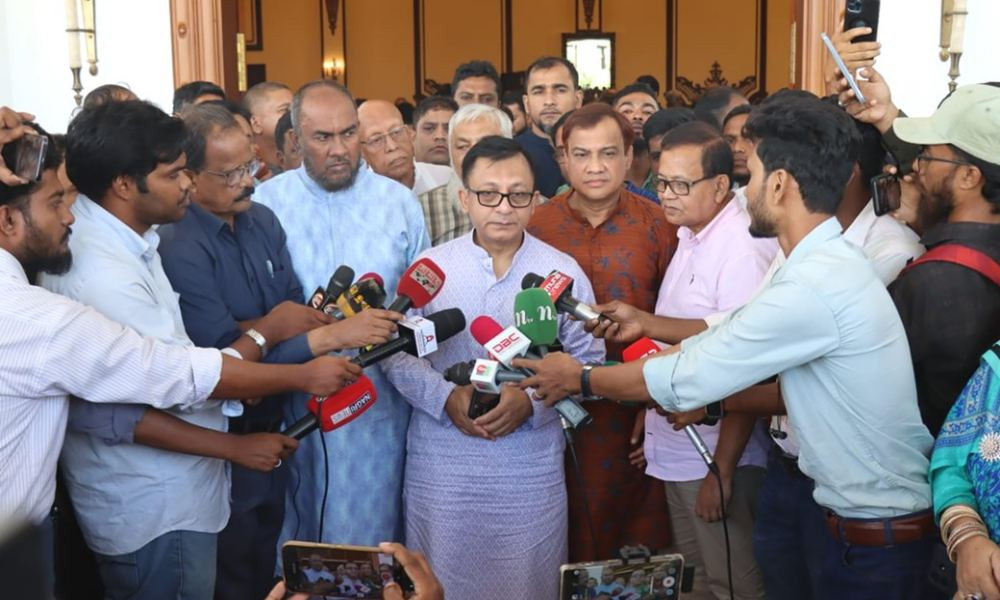
Addressing the event as chief guest, Commerce, Industries, Textiles and Jute Minister Khandaker Abdul Muqtadir said Bangladesh has already met the eligibility requirements for LDC graduation, but the country's next challenge is to ensure a smooth and sustainable transition.

He cautioned that the loss of LDC-specific trade preferences would expose key export sectors, including readymade garments and pharmaceuticals, to a more competitive global marketplace. To navigate the transition successfully, he said, Bangladesh must complete critical structural reforms and strengthen its economic fundamentals before the graduation takes full effect.
The minister said the government is prioritizing measures to improve energy supply, expand liquefied natural gas (LNG) infrastructure, restore stability in the banking sector, and streamline business regulations. He also announced plans to fully digitize key investment-related services, including company registration, trade licensing, and import-export registration, with the aim of improving the country's ease of doing business.

Highlighting one of the most pressing constraints facing the economy, Muqtadir said many industrial enterprises continue to operate below capacity because of inadequate gas supplies. Ensuring reliable energy availability, he noted, would significantly enhance industrial output and accelerate economic growth.

Presenting the keynote paper, Professor Dr. Mustafizur Rahman, Distinguished Fellow at the Centre for Policy Dialogue (CPD), outlined the economic challenges Bangladesh is likely to face after graduation, including the gradual erosion of preferential tariff benefits, heightened international competition, and the need for a more diversified export base. He stressed that raising productivity, accelerating export diversification, and implementing comprehensive policy reforms will be critical to maintaining competitiveness.
Former National Board of Revenue Chairman and former ICMAB President Md. Abdur Rahman Khan, FCMA, said Bangladesh's long-term success in the post-LDC era will depend on strengthening governance, modernizing infrastructure, ensuring policy continuity, and maintaining political stability. He added that the country's human capital remains one of its greatest strengths, provided reform initiatives are effectively implemented.
BGMEA President Mahmud Hasan Khan underscored the need to shift the focus from export volume to value addition and higher export retention. He said improved energy availability and greater access to affordable financing could enable the country's apparel industry to achieve annual growth of at least 10 percent. He also urged the central bank to expand its special financing facilities for export-oriented industries.
The dialogue also featured remarks from Radiant Group Chairman Md. Naser Shahriar Zahedi and Pran Group Managing Director Ilias Mridha, while the session was moderated by former ICMAB President Arif Khan, FCMA. The vote of thanks was delivered by ICMAB Secretary Monjur Md. Saiful Azam, FCMA.
Concluding the discussion, participants agreed that Bangladesh's graduation from LDC status represents a significant economic milestone, but its long-term success will ultimately depend on sustained structural reforms, reliable energy supplies, macroeconomic stability, a skilled workforce, and a more competitive investment climate.