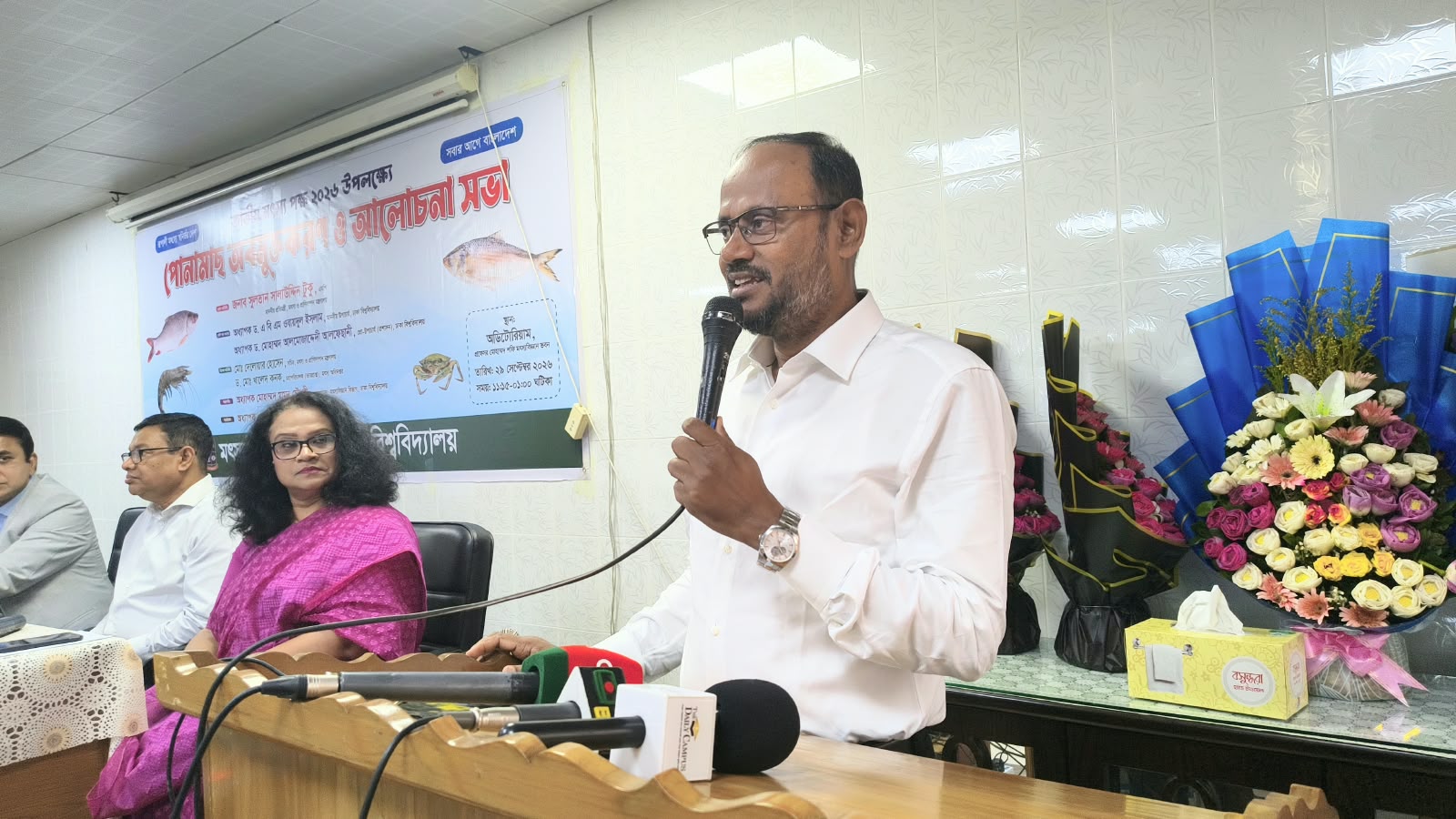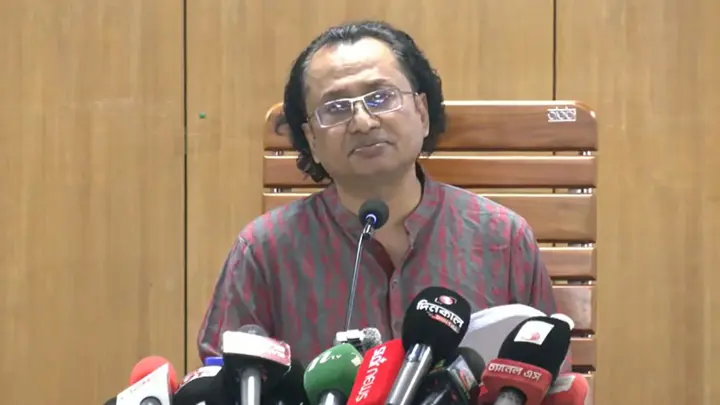




He made these remarks while speaking as the chief guest at a dialogue titled 'Food Value Chain in Bangladesh: Market System, Profit Margins and the Role of Intermediaries' organized by the Centre for Policy Dialogue (CPD) at BRAC Centre in the capital on Thursday.

The Commerce Minister said inflation reduces people's purchasing power and negatively affects the overall economy. In the post-COVID period, inflation increased in almost all countries due to excess liquidity, supply chain disruptions, and rising demand. However, while many countries were subsequently able to bring it under control, inflation in Bangladesh has remained at a high level for a long time.

He said one of the reasons for persistently high inflation in the Bangladeshi economy is logistics costs. While globally logistics costs are considered to be about 10% of GDP on average, in Bangladesh it is about 16%. If this cost can be reduced, food prices can also be significantly controlled.
The Minister said that market asymmetry is harming farmers. As an example, he said that although farmers have not received a fair price for potatoes for several consecutive years, they have continued to produce the same amount. This means that farmers are not receiving accurate market information and necessary guidance on alternative production plans.

He informed that an initiative is being taken to introduce traceability in the entire supply chain from agricultural production to the consumer. Through this, it will be possible to easily identify at which stage abnormal costs or price increases are occurring. He also emphasized reducing informal costs.

Khondkar Abdul Muttakir said that about 1.78 crore farmer families in the country live with limited income. Their scope for savings is very low. As a result, their capacity to invest in modern technology and high productivity in agriculture is also limited. For this reason, agriculture must be brought under more state support, research, and technology-based management.
He said that since independence, various governments have consistently supported the agriculture sector with subsidies, fertilizers, seeds, and irrigation facilities. But now is the time for a more integrated and technology-driven transformation of agriculture. Considering the country's soil, climate, and agricultural characteristics, an agricultural development strategy compatible with its own reality must be adopted.
The Minister further said that agriculture is a sector that is not operated in a specific environment like industry; rather, it is dependent on nature and various external risks. Therefore, to ensure national food security, continued support with special emphasis on agriculture must be provided.
He said that to reduce food inflation, special emphasis must be given to three things: reducing logistics costs, controlling production input costs, and increasing agricultural productivity. If productivity increases, farmers' income will rise, and it will also be easier to ensure food supply for consumers at affordable prices.
The keynote paper at the dialogue was presented by CPD Senior Research Associate Fakhruzzaman Al Kabir. The discussion, moderated by CPD Executive Director Dr. Fahmida Khatun, was addressed by former Vice-Chancellor of Bangladesh Agricultural University Professor Dr. Abdus Sattar Mandal, former Finance Secretary Siddiqur Rahman, former National Board of Revenue (NBR) Chairman Abdul Majid, and President of Bangladesh Garment Workers Solidarity Taslima Akhter Lima.