



Over the past few days, there have been repeated attacks on leaders and activists of the National Citizen Party (NCP) in Habiganj, Sylhet, and Golapganj. The NCP has directly blamed the ruling BNP, its youth wing Juba Dal, and student wing Chhatra Dal for these attacks. The allegations are not just about the assaults themselves, but also about counter-cases, obstruction of programs, and political intimidation – all of which raise new questions.

The most painful incident is the attack on Alif Chowdhury, a higher secondary student and local leader of the National Student Shakti. He has permanently lost one eye in the attack, and doctors say his other eye is also at risk. His family's financial situation is extremely weak. He used to support his entire family through freelancing alongside his studies; now he may carry the curse of blindness for the rest of his life. This is not just a tragedy for one young man; it is a failure of the state.

The question is: where is the state after this incident? No visible strong stance has come from the government. The Home Minister has played no visible role; it is unclear if he is even present. In a democratic state, it cannot be normal that there are serial attacks on opposition leaders and activists, a young man loses an eye, and yet no strong message comes from the top level of the government. Silence sometimes becomes the language of support. History tells us so.
NCP Convener Nahid Islam has alleged that the government is opposing the people. He said public anger is rising due to price hikes in gas, electricity, and essential commodities. He claims that in this situation, the government has chosen to suppress anti-government voices.

Jamaat-e-Islami Ameer Dr. Shafiqur Rahman has expressed similar concerns. He clearly stated that after one fascism departs, the nation will not accept another fascism. If someone's speech is disliked, it must be answered with words, not with rods. No one has the right to take the law into their own hands.

NCP Member Secretary Akhtar Hossain's remarks are even more significant. He alleged that attacks on the opposition are creating a frightening environment that poses a threat to democracy. He raised three demands: the state must take responsibility for Alif's treatment, the attackers must be arrested, and the opposition's security must be ensured. NCP Spokesperson Asif Mahmud Sajeeb Bhuiyan went a step further, saying that the failure to take action against the attackers suggests they are receiving patronage from the highest levels of the state.
Whether the allegations are true or false is a matter for investigation. But the fact that such a situation has arisen, allowing such allegations to be made, is shameful for the state.
Even more concerning is the politics of counter-cases. Despite being victims of attacks, top NCP leaders are facing cases of attempted murder, vandalism, and robbery. Nasiruddin Patwari and Sarjis Alam have claimed these cases are part of political vendetta.
Here, a major political question arises. Why is the BNP doing this? At one time, the BNP itself was a victim of fascist Hasina's atrocities. For nearly a decade and a half, they complained of cases, attacks, disappearances, arrests, and political suppression. From that experience, they should have been more tolerant. But in reality, after coming to power, they have begun to see opponents not as rivals but as enemies – and this allegation is growing stronger.
Political scientists have long explained this tendency. Robert Dahl, in his widely discussed theory, said that the foundation of democracy is political competition and participation. The politics of destroying rivals weakens democracy. Hannah Arendt warned that the abuse of power begins when opposition voices are identified as enemies. And Steven Levitsky and Daniel Ziblatt, in their famous research, have shown that modern democracy does not collapse in a day. It erodes gradually: first, opponents are delegitimized; then political violence becomes normalized; then state apparatus is politicized; and eventually, democracy survives only on paper.
Is Bangladesh walking that path? That question is no longer baseless today. Political violence is not new. But after the July Uprising, people thought Bangladesh would move toward a new political culture – tolerance instead of vengeance, greater respect for dissent. Reality is undermining that hope.
Equally worrying is the government's silence. In a democratic system, the government is not just the government of its own party; it also bears the responsibility for the opposition's security. If the government does not take swift action against attacks and bring perpetrators to justice, criminals become emboldened, and the law grows weak.
Here, the BNP also has room for self-reflection. Power is not permanent. This is history's greatest lesson. Those in power today may find themselves in the opposition tomorrow. So the culture they establish today may eventually victimize them in the future.
Democracy is not the name of vengeance; it is the name of coexistence. The politics of annihilating political opponents ultimately guarantees no one's safety. One of the key promises of the July Uprising was: no more fascism, no more political suppression, no more bloody vengeance. If that promise is broken, the sacrifices of July will also be called into question.
The government should immediately arrange for an impartial investigation into all incidents, including the attack on Alif Chowdhury, and bring the perpetrators to justice. The security of the opposition's political activities must be ensured. At the same time, a clear message must be sent to ruling party activists: no one is above the law. Because in a democracy, if the opposition is weakened, the government ultimately does not remain strong either. Democracy survives on a strong opposition, an independent judiciary, and the impartial application of the law.
Today's Bangladesh stands at that test. Failure here will not harm only one party; it will harm the entire state.
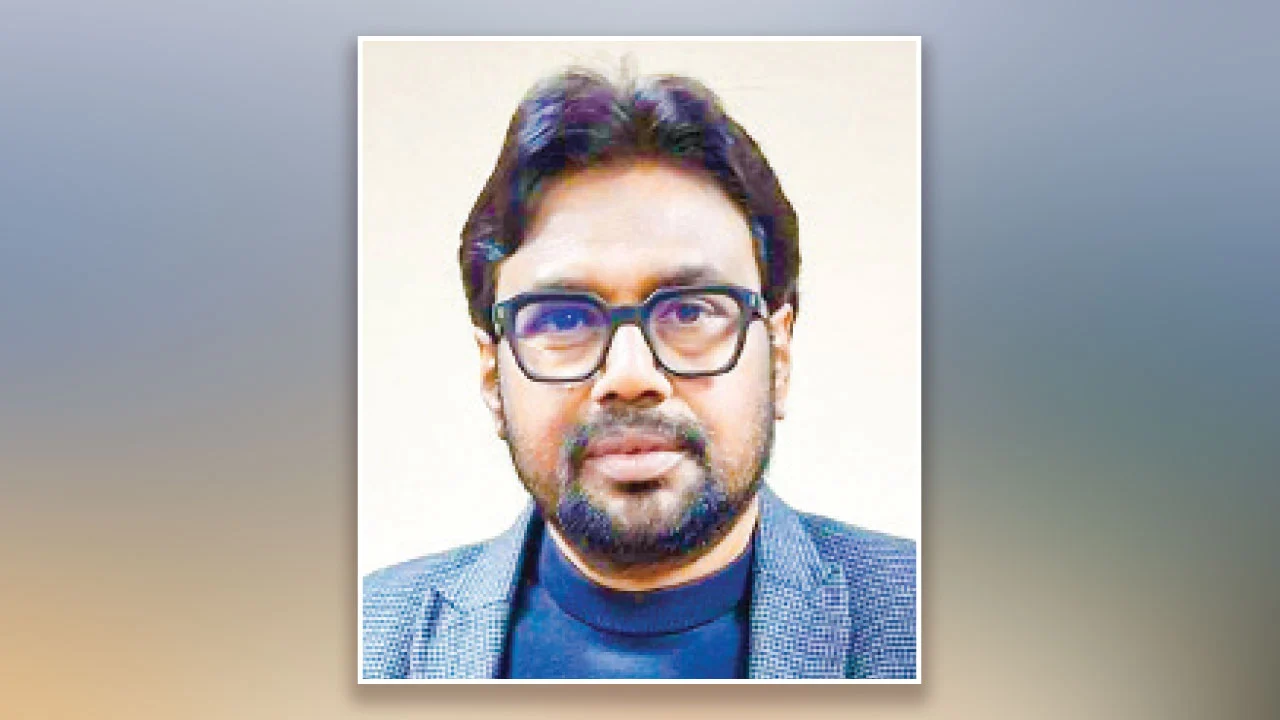
Author: Former General Secretary, Dhaka Union of Journalists