


1. Sheikh Hasina has not changed, nor has her politics.

The first thing that stood out to me is that Sheikh Hasina remains exactly who she has always been. There is no visible change in her political stance, her rhetoric, or her perspective toward opponents. I also saw nothing new in the statements of her close associates. However, a few leaders responsible for addressing the international community did appear to make a comparatively more restrained effort in their remarks.

2. An attempt to reduce the casualty debate to a numbers game.
To me, the statement from Sheikh Hasina's son seemed even more direct than before. The essence of the message was to frame the casualty controversy as primarily a debate about numbers. In my view, this is a significant political signal. It shifts the focus to "how many," while pushing aside the questions of "why," "how," and state accountability. This perspective, I believe, is the most telling aspect.

3. The political battle continues from abroad.

Sheikh Hasina is currently in India, but her political activities have not ceased. On the contrary, she is using international media platforms to broadcast her message worldwide. This, to me, holds the biggest lesson. If a political force has the backing or diplomatic leverage of a powerful state in international politics, spreading its message becomes much easier. Whatever government holds power in the future, this reality cannot be ignored.
4. While domestic news can be controlled, foreign narratives cannot be silenced.
It may be possible to limit a political leader's publicity within Bangladesh, but that is not feasible in international media. In my opinion, if Sheikh Hasina's statements are regularly featured in foreign media, the response must be given on the same scale. Addressing only domestic media cannot shape international public opinion. Without English-language content of international standard, research-based analysis, and effective public diplomacy, success in this battle is difficult. If this is not done, an alternative political narrative will gradually become established internationally, which will later be hard to overturn.
5. I see a repetition of old political narratives.
In my observation, the Awami League's political strategy lacks fundamental novelty. The old narratives of militancy, terrorism, the Liberation War, and ideological divisions seem likely to resurface. Today, Dr. Muhammad Yunus and the student leaders may be the primary targets. But I believe it will not be long before figures like Tariq Rahman, Shafiqur Rahman, Nahid Islam, and the broader opposition leadership become the targets of similar narratives. This is my political analysis; the future will determine its accuracy.
6. The BNP's biggest weakness: communication.
The current government's biggest weakness, in my view, is its communication strategy. In many cases, it has appeared that their default policy is "no communication." However, the recent diplomatic note from Bangladesh's Ministry of Foreign Affairs addressed to India was an exception. After a long time, the state was seen articulating its position confidently. To my knowledge, this has been one of the most talked-about diplomatic notes from Bangladesh's Foreign Ministry in recent times. My expectation is that the BNP's political leadership will also learn from this experience. Particularly, if Tariq Rahman wants to sustain the BNP in the long term, the party must be shaped into a clear center-right political force and must gain the capacity to lead a broader anti-government center-right and right-wing coalition. At the same time, the party must distance itself from influences that either do not understand international realities or are guided by divergent interests.
Finally...
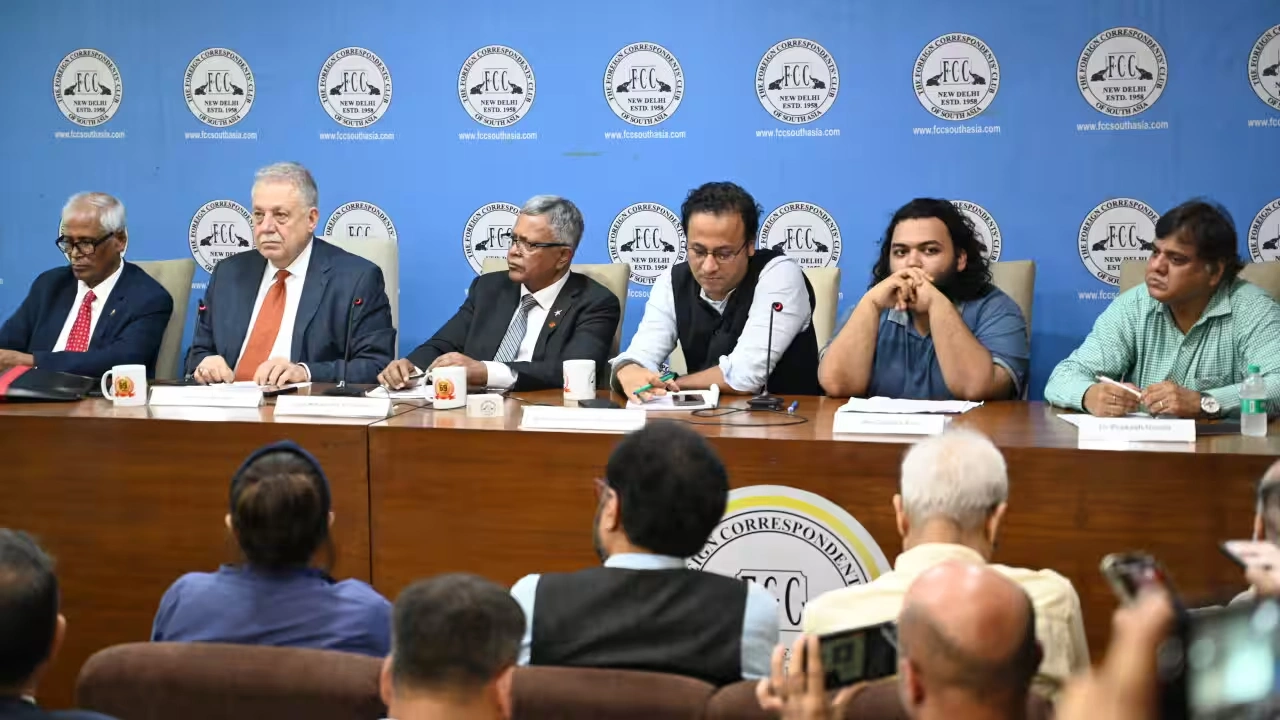
The biggest lesson I take from this press conference is this: Bangladesh's future political battle will not be fought only at the ballot box. It will be fought in international media, on social media, in research reports, in think tanks, and in the arena of global public opinion. The political force that prioritizes this information war, articulates its position in international languages, and can respond swiftly will emerge stronger in the politics of the future. The rest will remain preoccupied with domestic politics, while someone else writes their story for the outside world.