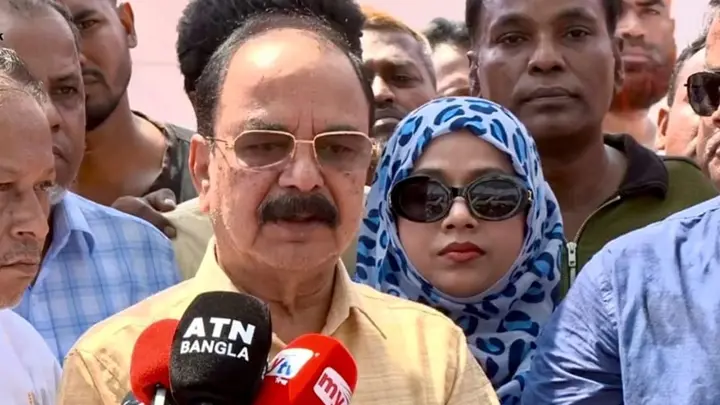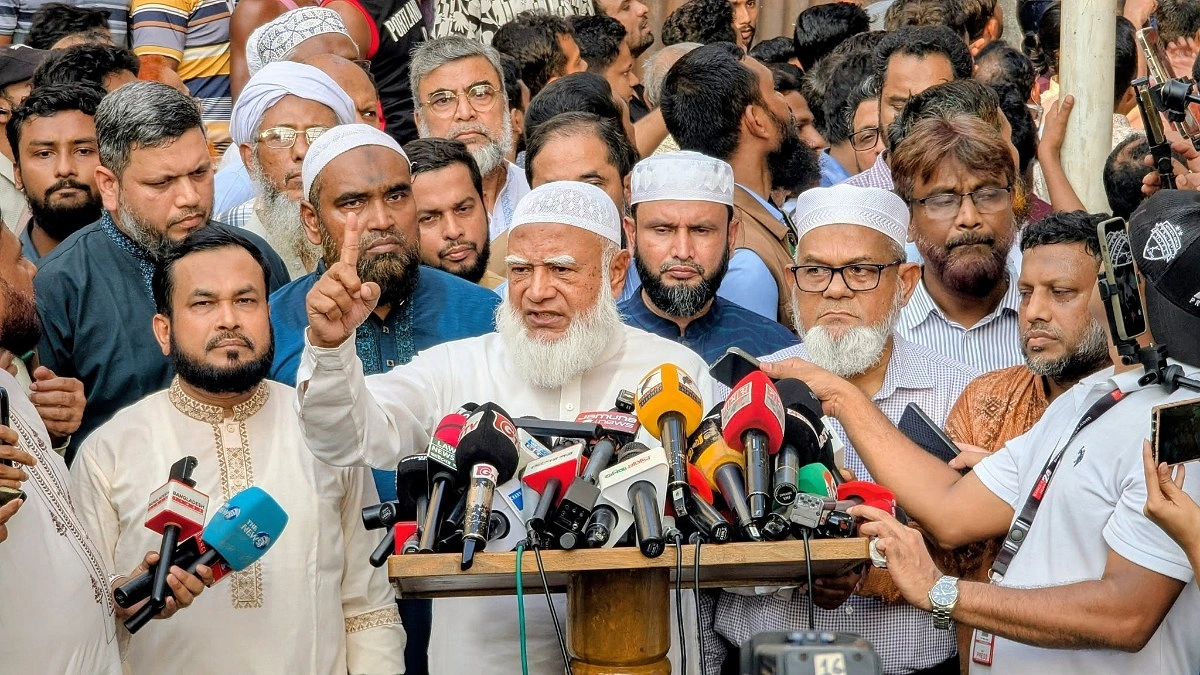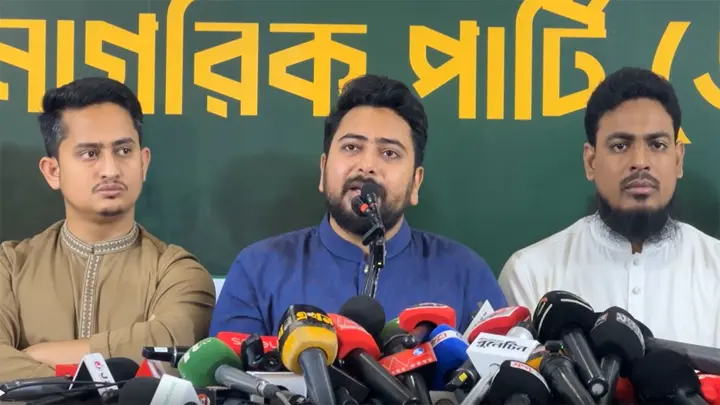


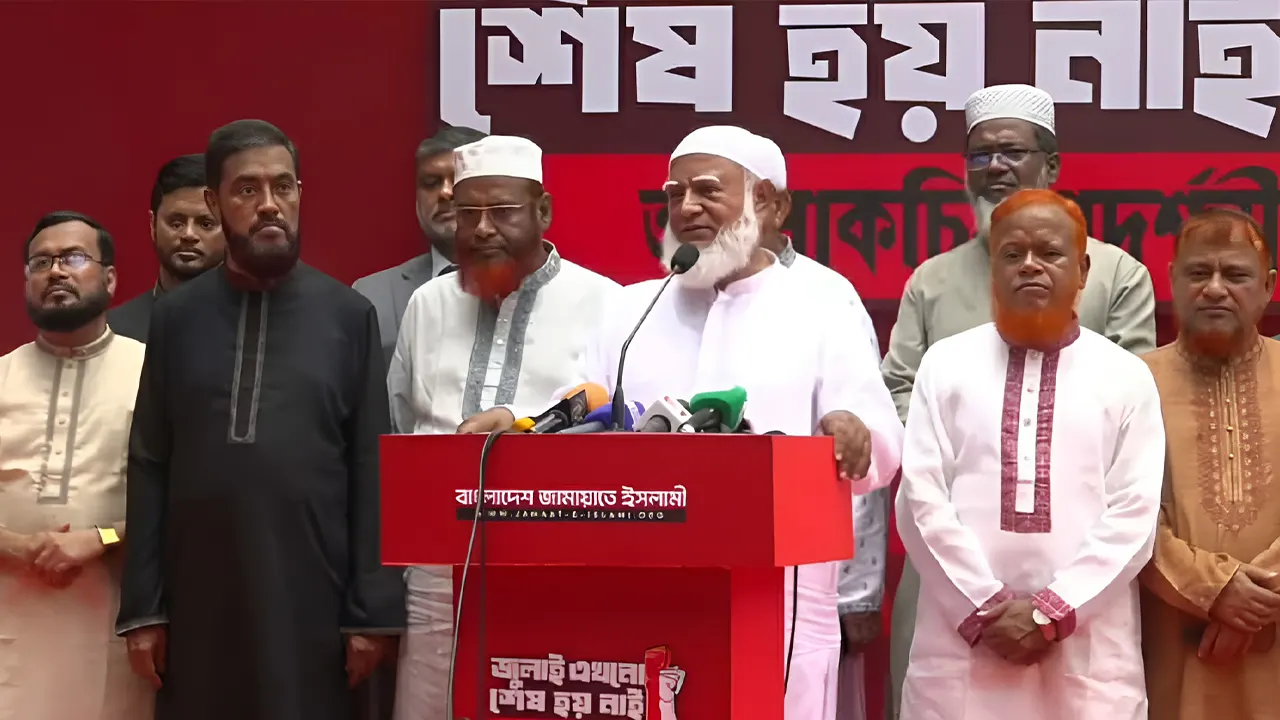

He said these things while talking to journalists after visiting the exhibition at the official residence of the opposition leader in the capital on Saturday (August 8). The Jamaat Amir informed that they remain deeply respectful towards anyone who has a benevolent contribution in history, and they have taken a neutral and pragmatic position in this regard.

Regarding the non-inclusion of Ziaur Rahman's speech, Dr. Shafiqur Rahman said, 'He was not an autocratic ruler. Those who were authoritarian and aggressive have been highlighted here. The continuity of history has been shown.'

He recalled that attempts have been made to deprive people of their rights for 15 and a half years. Highlighting the participation and sacrifice of students and masses in the July movement, he said the attacks on female students at Dhaka University on July 15 and the killing of Abu Sayed, a student of Begum Rokeya University in Rangpur, on July 16 accelerated the movement further. He also alleged that even when the army refused to fire on the people on August 3, Sheikh Hasina still wanted to carry out the massacre.
The Jamaat Amir further said that although an interim government was formed later, many advisers could not demonstrate impartiality. Although 31 parties agreed on minor issues in the reform commission, differences arose over their own interests—most of which, he claimed, came from the current ruling party side.

He said that regarding the formation of the Supreme Court justices and the Election Commission, their position was in favour of a non-partisan commission rather than partisan control. He alleged that although there was consensus among the parties to form a constituent assembly or reform council to legitimise the reform proposals, that position was changed after the election and the formation of the government.

Dr. Shafiqur Rahman said, 'So many people were disabled, injured, and risked their lives to join the movement—was it only to remove one party of the same kind and seat another?'
He informed that although they demanded formation of a reform council inside parliament, they have taken to the streets due to lack of redress, and the movement to achieve rights will continue with the people.
Regarding the purpose of the exhibition, he said it does not depict the successes of any government; rather, it presents the history of oppression of people under fascist, autocratic and authoritarian rules over the ages. He said, 'The aspirations of July have not yet been fulfilled. The day people's rights are ensured, July will truly come to an end.'