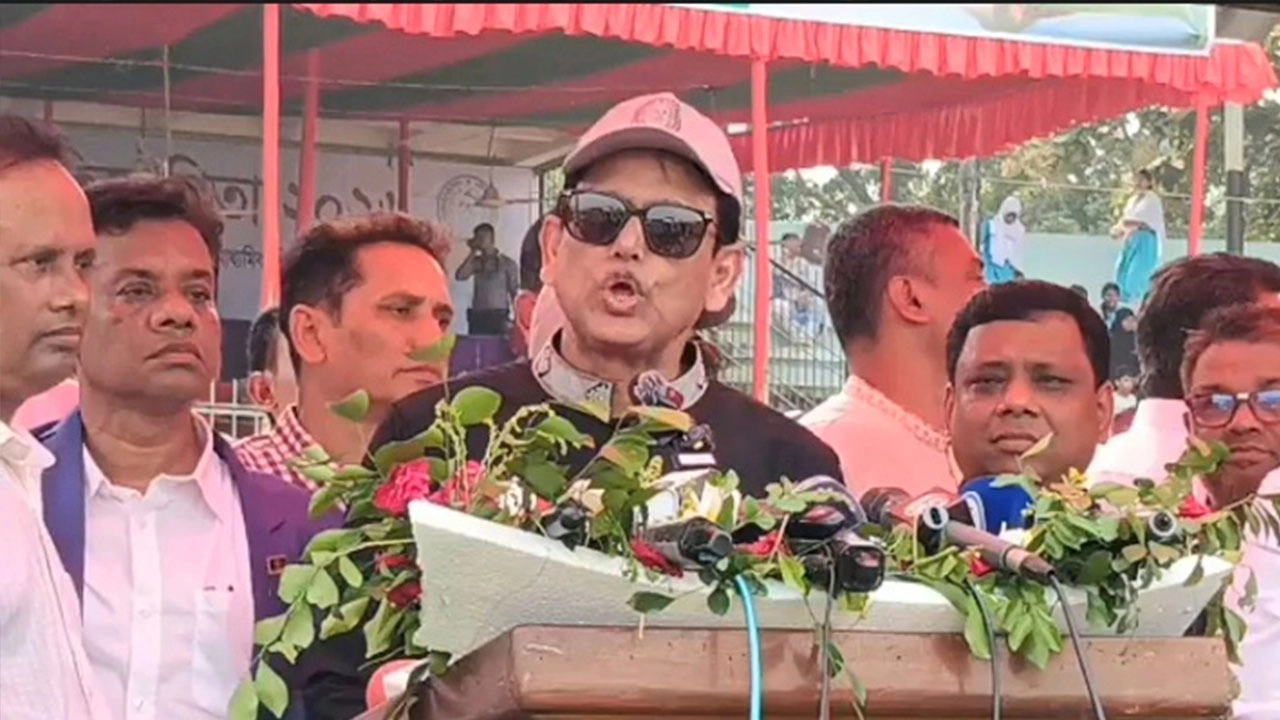




He said these things in the speech as a special guest at the workshop titled ‘Learning Through Play’ on information book review, organized by the National Academy for Primary Education (NAPE) at a hotel in Gulshan, the capital today.

Bobi Hajjaj said, it is not possible to ensure effective and lasting education for children only through memorization. If opportunities for learning are created through sports and various creative activities in a joyful environment, children's ability to learn and scope of thinking will increase.

He said, in addition to incorporating local games into the curriculum and textbooks in primary education, school infrastructure should also be made child-friendly and suitable for play-based learning.
412 local games documented
The state minister said NAPE and partner organizations have conducted research and collected information on games prevalent at the local level. So far 412 games have been documented, which can be used in education through the participation of students in schools.

He also said work has been done on how to systematize more than 700 games prevalent at the local level and incorporate them into the primary education curriculum.

Initiative to use China-Japan experience
Citing the examples of education systems in China and Japan, Bobi Hajjaj said toys and games have been integrated with different subjects of the curriculum in these countries. Which toy or game will be used to teach which chapter of which subject in which class is specified in the curriculum and textbooks.
He also mentioned that textbook publishers, toy manufacturers and curriculum developers work in an integrated manner in this regard.
Talking about plans to take similar initiatives in Bangladesh, the state minister said discussions have been held with the National Curriculum and Textbook Board (NCTB). Soon, after holding discussions with relevant stakeholders, necessary steps will be taken regarding how to more effectively include games and toy-based learning in primary education.
Emphasis on accountability in implementation
Bobi Hajjaj remarked that for primary education reform, it is not enough to just formulate a new curriculum; its proper implementation also has to be ensured.
He said accountability needs to be ensured at every stage of construction and management of school classrooms, play areas, learning environment and infrastructure. Creating a joyful, safe and effective learning environment for children is one of the main goals of primary education reform.
Chief guest at the event was Dr. A N M Ehsanul Haque Milon, Minister for Education and Primary and Mass Education. The programme was presided over by Farid Ahmed, Director General of the National Academy for Primary Education (NAPE).
State Minister for Youth and Sports Md. Aminul Haque, Country Director of Save the Children Shumon Sengupta and Director General of the Directorate of Primary Education Shahina Ferdousi were present as special guests.